
Lithium iron phosphate (LiFePO4) batteries have become a preferred energy storage solution for electric mobility, solar systems, and industrial equipment. Compared with lead-acid batteries, LiFePO4 cells offer higher cycle life, improved thermal stability, and consistent discharge performance. These advantages, however, require a fundamentally different LiFePO4 battery charger design.
Unlike sealed or wet lead-acid batteries, LiFePO4 chemistry does not tolerate overvoltage or uncontrolled current. As a result, understanding LiFePO4 battery charger characteristics is essential for ensuring both safety and long-term performance.
In the previous article on sealed battery charger design , we discussed how voltage precision protects enclosed batteries. With LiFePO4 systems, charging logic becomes even more stringent and digitally driven.
Why LiFePO4 Charging Is Different
LiFePO4 batteries operate within a narrow voltage window. Exceeding the recommended charge voltage can permanently damage the cell structure, while insufficient voltage prevents full capacity utilization. This narrow margin makes charger accuracy non-negotiable.
Another key difference lies in the flat voltage curve of LiFePO4 cells. During most of the charge cycle, voltage changes very little, which means state-of-charge cannot be reliably inferred from voltage alone. Charger control must rely on precise current regulation and termination logic.
CC/CV Charging Profile for LiFePO4 Batteries
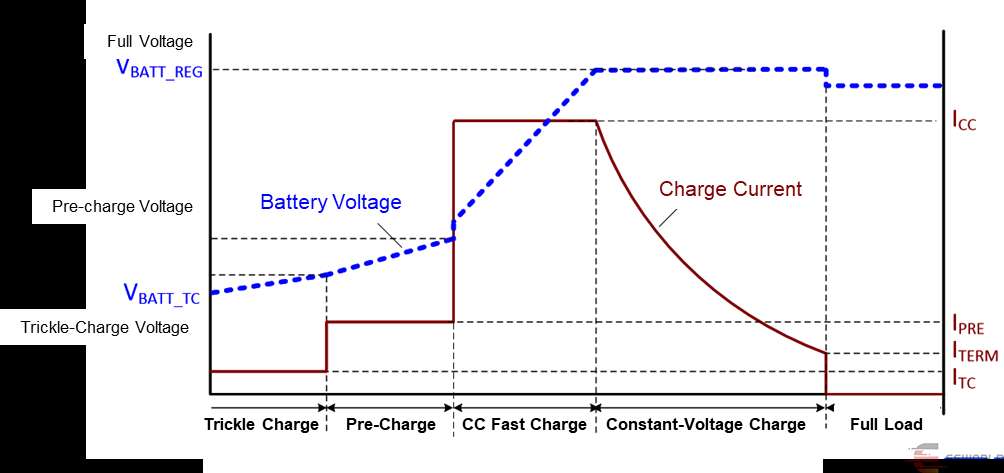
Most LiFePO4 battery chargers use a constant current / constant voltage (CC/CV) charging profile. During the initial phase, the charger supplies a fixed current until the battery voltage reaches its upper threshold.
Once this voltage limit is reached, the charger transitions into constant voltage mode. Charging current gradually tapers off until it reaches a predefined cutoff point, at which charging terminates completely.
Unlike lead-acid systems, LiFePO4 chargers do not use a float charging stage. Continuous float voltage can accelerate cell aging and must be avoided.
For a chemistry-level explanation, the Wikipedia reference on lithium iron phosphate battery behavior provides a solid foundation on why CC/CV control is critical.
Voltage Accuracy and Cell Protection
Voltage accuracy is the most critical characteristic of a LiFePO4 battery charger. Even small deviations beyond recommended limits can trigger internal protection circuits or permanently degrade battery capacity.
Modern chargers achieve high voltage accuracy through precision reference circuits, digital calibration, and real-time feedback control. In many designs, voltage resolution is measured in millivolts rather than tenths of volts.
Our technical overview on high precision battery charger voltage design explains how sensing accuracy directly impacts lithium battery safety.
Current Control and Charging Rate Considerations
While LiFePO4 batteries can handle relatively high charge currents, charging rate must still be
carefully controlled. Excessive current can cause internal
