
Custom Battery Charger
OEM/ODM support allows customization of voltage, current, and connector types. Manufacturers and charging station operators can ensure compatibility, efficiency, and safety for a variety of EV applications.
Lead Acid Battery Chargers
A: If your 6V 4Ah SLA lead-acid battery drops to 1Ah, it usually means severe sulfation and internal degradation. Full recovery is unlikely, but partial restoration is sometimes possible if you follow careful methods. Here’s what you should know:
Why Did My Battery Lose So Much Capacity?
The main reason is sulfation. During normal discharge, soft lead sulfate crystals form on the plates and are usually converted back during charging. If the battery sits discharged or undercharged for a long time, these crystals harden and block the plates. Result: higher internal resistance and drastically lower capacity.
Can I Recover Any Capacity?
Complete recovery is rare, but you can try:
- Pulse Desulfation Charging – uses high-frequency pulses to break down sulfate crystals. May restore 0.5–1Ah.
- Controlled Low-Current Charge – gently charge at 6.9–7.2V, ~0.4A for 12–24 hours. Monitor temperature.
- Mild Cycling – only if some capacity is restored, shallow charge/discharge cycles can help.
How to Test if the Battery is Dead
- Open-Circuit Voltage: Healthy 6V SLA ~6.3V. Much lower = likely dead.
- Load Test: Connect a small load (6V 10W bulb). Voltage dropping below 5V instantly = battery failed.
Final Recommendation
Replacing the battery is usually the best option. Partial recovery is experimental, and the effort often outweighs the small capacity you might regain.
Lithium Battery Chargers
Adjustable li-ion battery chargers let EV owners set the current to match different battery packs. Compatible with 1S-20S li-po battery chargers and multi-voltage 3.6-84V li-ion chargers, they ensure safe and efficient charging. OEM/ODM options provide flexibility for manufacturers and charging stations.
Multi-voltage li-ion battery chargers support 3.6-84V packs for electric cars, buses, and hybrid vehicles. They maintain proper voltage and current, extending battery lifespan and ensuring consistent performance for private and commercial EV users.
High-quality li-ion battery chargers provide reliable charging for EVs, trucks, and buses. Adjustable current options from 0.5-20A and compatibility with 1S-20S packs improve safety, reduce maintenance, and enhance battery longevity.
OEM/ODM li-ion chargers allow charging stations to standardize equipment while supporting voltage ranges of 3.6-72V. They handle multiple battery types, including li-po and li-ion packs, ensuring efficiency, safety, and broad compatibility.
Reliable li-ion chargers prevent overcharging and overheating, extending battery life. Adjustable and multi-voltage chargers maintain optimal performance across 1S-20S packs, making them ideal for EV owners and commercial stations.
Adjustable current li-ion battery chargers allow precise control, reducing overheating risks. Perfect for 1S-20S packs, these chargers offer safer charging for electric vehicles, toys, and other battery-powered equipment.
Multi-voltage li-ion chargers adapt to different EV battery packs, from 3.6V to 84V. This flexibility ensures efficient charging, protects batteries, and supports various OEM and aftermarket applications.
OEM li-ion battery chargers provide manufacturers with reliable, customizable charging solutions. Adjustable voltage and current ranges ensure compatibility with EVs, buses, and hybrid vehicles while maintaining quality standards.
Efficient li-ion chargers optimize current and voltage for each battery pack. Adjustable multi-voltage chargers improve charge times, battery health, and energy efficiency for electric cars, trucks, and commercial EV fleets.
Yes, multi-voltage li-ion chargers can handle li-po, li-ion, and other battery packs ranging from 3.6-84V. Adjustable current ensures safe charging for 1S-20S packs, supporting both OEM and consumer applications.
Adjustable li-ion chargers allow precise current control, preventing overcharge and overheating. They extend battery lifespan, improve EV safety, and are compatible with a wide range of packs from 1S-20S.
OEM li-ion chargers offer consistent voltage and current control, reducing battery wear and maintenance. They support multi-voltage ranges, making them cost-effective for EV manufacturers and charging stations.
Multi-voltage li-ion chargers adapt to various battery packs, ensuring efficient charging for buses, trucks, and EV fleets. Their flexibility reduces downtime and protects battery health, ideal for commercial operations.
Adjustable li-ion chargers let EV owners optimize current and voltage for different battery packs. This control prevents overheating, improves efficiency, and extends battery lifespan, making them a preferred choice.
Advanced li-ion chargers monitor voltage and current, preventing overcharging or overheating. Multi-voltage and adjustable current chargers protect 1S-20S packs, ensuring long-term battery reliability.
Yes, high-quality li-ion chargers optimize charging speed and battery health. Compatible with 1S-20S packs, they enhance EV performance, reduce downtime, and support OEM/ODM manufacturing needs.
Multi-voltage chargers support diverse EV battery packs, enabling faster, safer, and more efficient charging. They ensure reliability for commercial and public charging stations, improving user satisfaction.
Adjustable chargers allow OEMs to provide flexible, safe, and reliable charging solutions. Multi-voltage ranges accommodate different EVs, making production and maintenance more efficient.
Reliable li-ion chargers offer adjustable current, multi-voltage support, and protection against overcharging. Ideal for EVs, buses, trucks, and hybrid vehicles, they ensure battery longevity and safe operation.
The charging time of a robot vacuum mainly depends on its battery capacity and the charger’s power output. For typical home models with 2600–5200 mAh lithium batteries, a full charge usually takes 3–5 hours, though this can be shorter or longer depending on usage and battery condition.
For larger commercial robot vacuums with high-capacity battery packs, smart chargers with power outputs up to 3000W can provide much faster charging. Phonix intelligent chargers also include Battery Management System (BMS) features, monitoring battery health, charge cycles, and communicating key data for safe, efficient operation. Fast charging, reliable performance, and extended battery life make a big difference in both household and professional cleaning robots.
A robotic cleaner may pause during a cleaning session for several reasons, most of which are easy to resolve. At a glance, the most frequent cause is battery depletion, but other factors can contribute.
Battery Level
When the power pack runs low, the vacuum will halt and usually return to its docking station to recharge. Using a high-efficiency or intelligent charger, like Phonix’s smart charger, allows a faster top-up and gets the robot ready for the next session.
Obstacles or Tangling
Cables, hair, or small objects can block the brushes or wheels. Regularly removing such obstructions ensures smooth cleaning without unnecessary interruptions.
Commercial Robots
Larger commercial units with big battery packs benefit from chargers with built-in battery monitoring systems. These intelligent chargers help prevent over-discharge, optimize charging cycles, and ensure uninterrupted operation.
The charging time for a robot vacuum mainly depends on battery capacity and the charger’s power output. Typical home models with 2600–5200 mAh lithium batteries usually need 3–5 hours for a full charge, though it may vary with usage and battery condition.
Using a high-power smart charger like Phonix’s can speed up charging and improve battery cycles, so your vacuum is ready sooner without compromising battery health. For larger commercial models with high-capacity batteries, smart chargers equipped with Battery Management Systems (BMS) monitor battery status, prevent over-discharge, and protect the pack, ensuring reliable and uninterrupted cleaning schedules.
Robot vacuum batteries gradually lose capacity mainly because of improper charging habits, extreme temperatures, and long-term storage without care. Managing these factors ensures your vacuum stays reliable and performs efficiently over time:
Battery Charging Habits – Avoid letting the battery fully drain too often. Partial charges are fine, and using a high-power smart charger, like Phonix’s, helps optimize charge cycles, prevents over-discharge, and preserves battery health. This applies to both household robots (2600–5200 mAh) and commercial models with larger packs.
Temperature and Environment – Charge and operate your vacuum within moderate temperatures. Extreme heat or cold can speed up battery degradation.
Storage Practices – If you won’t use the vacuum for a long time, store the battery at roughly 50% charge in a cool, dry place to reduce self-discharge and aging.
BMS and Smart Charging – For commercial robots with large-capacity batteries, chargers equipped with Battery Management Systems (BMS) monitor battery health, track cycles, prevent overcharging or deep discharge, and enable safe fast-charging, ensuring continuous operation and extended lifespan.
Following these practices and using intelligent charging solutions can help your robot vacuum maintain top performance and a long-lasting battery.
Yes, a smart battery charger can maintain and even help restore the health of robotic vacuum batteries. It does this by monitoring voltage levels, adjusting charging currents, balancing individual cells, and running controlled rejuvenation cycles that reduce sulfation and prevent overcharging, effectively prolonging the battery’s lifespan.
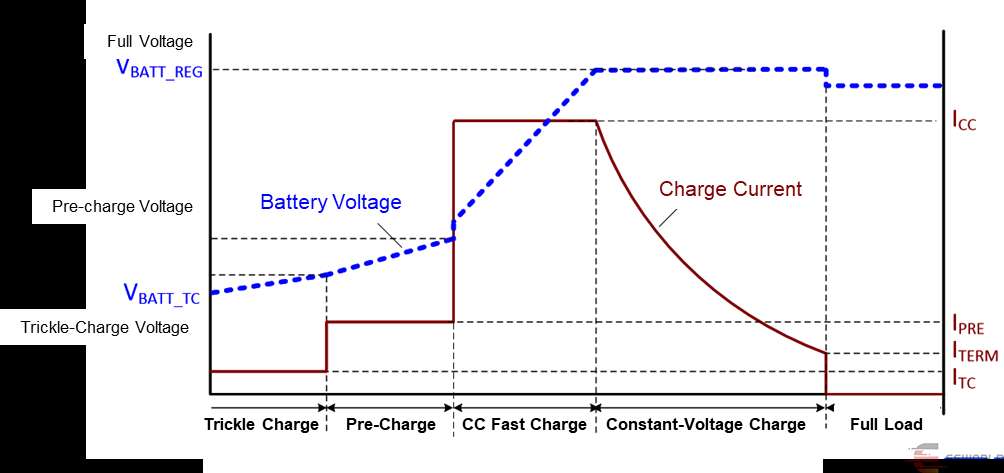
It’s normal for the charging current to drop gradually as the voltage increases.
LFP cells have a very flat voltage curve, so even a small rise in voltage means the cell is already nearing full charge. Internal resistance increases slightly, causing the current to taper off naturally.
Not necessarily.
In real-world charging for Lifepo4 battery charger, most chargers don’t keep a perfectly flat “constant current” phase. Many start reducing current earlier to avoid voltage overshoot and to balance the cells smoothly before entering the CV phase for Lifepo4 battery charger.
Typically around 3.55 V to 3.6 V per cell.
Once the cell reaches this range, the charger switches to CV mode, and the current decreases more quickly until the battery is fully charged.
Yes, that’s completely normal.
As the battery approaches full charge, current naturally drops to protect the cells and ensure a longer lifespan. Slower charging at the top is a sign of healthy charging behavior, not a problem.
Compatibility — Finding the Right Charger
Check the scooter’s battery voltage (e.g., 36V) and connector type before choosing. Using the correct voltage and polarity prevents system damage.
👉 Read more: Smart Wheel Scooter Charger Compatibility FAQ
Smart Wheel Scooter fast charger — Fast Charging — Safe or Risky?
A: Smart chargers can safely increase charging speed by automatically adjusting current flow. However, it’s best to avoid excessive fast charging for long-term battery health.
👉 Detailed analysis: Fast Charging FAQ
Troubleshooting — When Charging Fails if we use Smart Wheel Scooter charger?
A: Inspect the charger light, cable connection, and battery fuse. A blinking red or green light often means the charger has detected a protection issue.
👉 Fix it here: Charging Problem FAQ
Q: Which smart chargers are reliable for Smart Wheel Scooters?
A: Choose chargers with CE/UL certifications, auto cutoff, and efficient cooling. Quality smart chargers balance speed, safety, and long-term reliability.
👉 See the list: Best Smart Charger for Smart Wheel Scooter 2025
how to choose lithium battery charger?
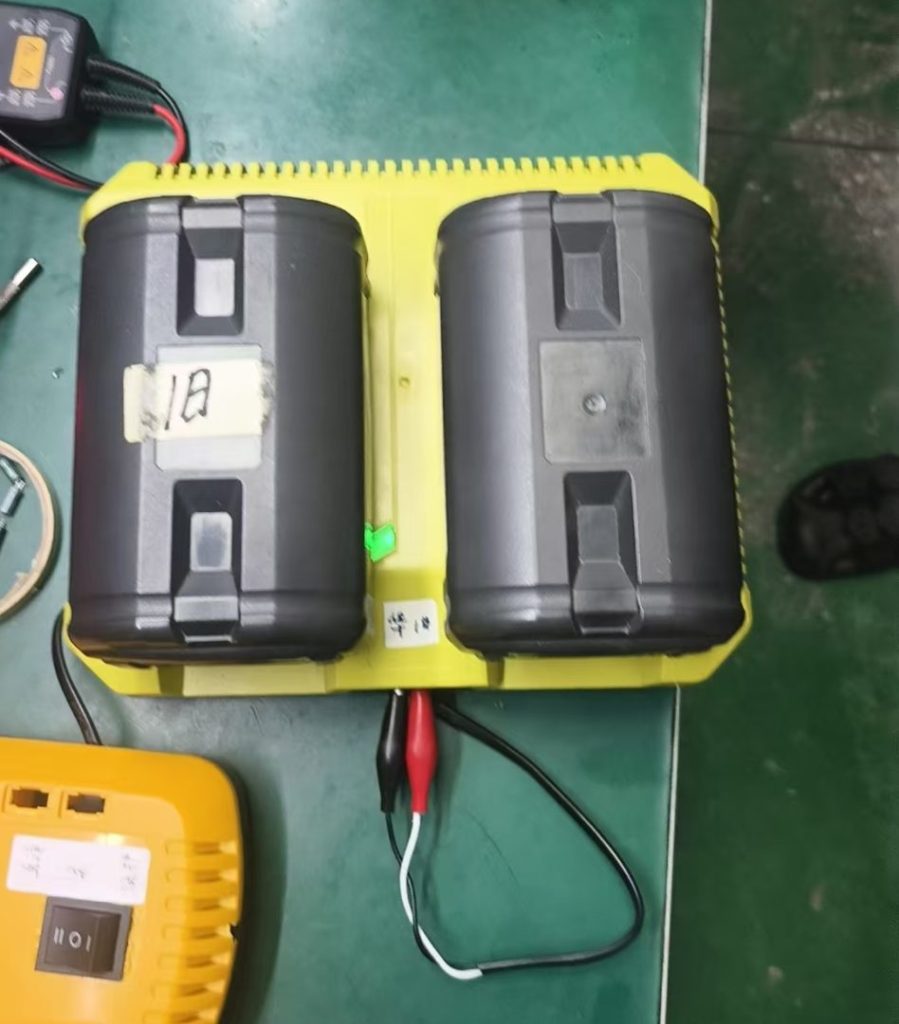
Wondering how to choose a lithium battery charger? Selecting the correct charger is critical for battery safety, performance, and long service life. Lithium batteries are sensitive to voltage and charging profiles, so using the wrong charger can permanently damage the battery or reduce its capacity over time.
To choose the right charger, you should follow these essential steps:
First, clearly identify your battery chemistry, such as lithium-ion (Li-ion) or lithium iron phosphate (LiFePO4). Each chemistry requires a different charging voltage and algorithm, so they are not interchangeable.
Second, check the full charge voltage of your battery pack. For example, a 10S Li-ion battery requires 42V full charge voltage, while a LiFePO4 pack has a different voltage curve. Matching voltage precisely is essential.
Third, ensure the charger output voltage exactly matches the battery system specification. Even small mismatches can lead to overcharging or undercharging issues.
Fourth, select an appropriate charging current. A general recommendation is between 0.2C and 0.5C depending on battery size and application. Higher current charging may reduce charging time but can increase thermal stress.
Fifth, always choose a smart charger with built-in protection functions such as over-voltage protection, temperature monitoring, and automatic cut-off. Intelligent chargers help extend battery life and improve safety.
For more technical background on lithium battery charging principles, you can refer to the IEC international standards on battery safety and charging systems:
https://www.iec.ch
Using a properly designed charger ensures stable performance, improves energy efficiency, and significantly extends battery lifespan.
At Phonix, we design smart Lithium Battery Chargers for industrial, mobility, and OEM applications, providing optimized charging profiles tailored to different battery systems.
Smart Charging & BMS Systems
A smart charger protects your battery by detecting the battery type and condition, managing the charge rate, and preventing issues like overcharging, overheating, or deep discharge. These safeguards help avoid common causes of battery degradation and extend the overall life of the battery.
Yes, regularly using a smart charger helps maintain optimal voltage levels, balance the cells, and prevent capacity loss. This ensures that your robotic vacuum runs efficiently, with longer runtime and more consistent performance over time.
For best results, it is recommended to use a smart charger every few weeks or whenever you notice signs of reduced battery capacity, such as shorter runtime or slower charging. Regular maintenance helps keep your robotic vacuum battery healthy and reliable.
Charging Safety — Why Smart Chargers Matter
Not always. Using the wrong charger can cause overheating or even battery damage. Smart chargers include overcharge, short-circuit, and temperature protection, ensuring safe charging every time.
👉 Read full guide: Smart Wheel Scooter Charger Safety FAQ
Smart Wheel Scooter battery life
A: Yes. Smart chargers use constant current/constant voltage (CC/CV) algorithms that prevent overcharging and heat buildup, extending the scooter battery’s lifespan.
👉 Learn more: Battery Life FAQ
Q1: What is a Smart Charger?
A1: A smart charger integrates advanced BMS systems and IoT monitoring to ensure safe, efficient, and reliable battery charging. Learn more about our Smart Charger solutions.
Q2: How does IoT improve charging performance by smart charger?
A2: IoT-enabled chargers allow remote monitoring and management of battery status, optimizing charging frequency and extending battery life. Check our IoT Battery Management page for detailed solutions.
Q3: Which batteries are compatible?
A3: FANGXIN smart chargers support Li-ion, Lead-Acid, and NiMH batteries, suitable for devices like electric scooters and robot vacuums. See our Battery Compatibility Guide for more information.
Yes, keeping your phone in Low Power Mode consistently is safe and can even help your battery last longer.
Low Power Mode reduces background activity, limits performance, and dims the screen — all of which save energy and reduce stress on your battery. Importantly, it does not affect the long-term health of your battery.
The only trade-off is that your phone may feel slightly slower and some notifications or updates could be delayed.
💡 Tip: For optimal battery longevity, keep your battery between 20% and 80% rather than fully charging to 100% or letting it drain to 0%.
Yes, indirectly. While Low Power Mode doesn’t change the chemistry of your battery, it reduces heat and heavy workload — two major factors that degrade lithium-ion batteries over time.
By lowering background tasks, screen brightness, and performance peaks, it helps your battery last longer per charge and stay healthier over months and years.
Q: Will my phone be slower if I always use Low Power Mode?
A: Yes, your phone may feel slower if you always use Low Power Mode. This setting reduces power consumption by limiting background activity, lowering processor performance, and disabling certain non-essential functions to extend battery life.
Low Power Mode is designed to conserve battery energy when charge levels are low or when users want longer operating time between charges. To achieve this, the system may reduce CPU speed, decrease screen brightness, limit automatic downloads, pause background app refresh, and reduce visual effects. As a result, some apps may load more slowly and multitasking performance may feel less responsive.
The impact depends on how you use your phone. For basic tasks such as messaging, browsing, and phone calls, many users notice little difference. However, gaming, video editing, navigation, and heavy multitasking often show slower performance because these activities require greater processing power.
Low Power Mode is mainly a power-saving feature rather than a battery repair tool. It works alongside modern Smart Charging Technology and intelligent power management systems that help reduce unnecessary energy consumption. Good charging habits and proper Battery Safety & Protection practices remain important for long-term battery reliability.
Battery performance and energy efficiency continue to be active research topics. Organizations such as the Battery University provide technical information about battery behavior, charging practices, and power management principles used in modern electronic devices.
Related Question: Does Low Power Mode damage battery health?
Answer: No. Low Power Mode does not damage battery health. In many cases, reducing power demand may lower battery temperature and reduce charging stress during daily use.
Keeping Low Power Mode on is generally better if you want to reduce battery wear and extend the time between charges.
It’s especially helpful if you use your phone heavily during the day or don’t have easy access to a charger.
However, for maximum performance or full-featured experience, you can toggle it off temporarily when speed and real-time updates matter.
Source from Quora
Answer:
A BBA (Battery Balancing Adapter) handles one task: balancing cell voltages during charging.
A BMS (Battery Management System), however, is your battery’s dedicated guardian. It performs cell balancing while also monitoring voltage, temperature, and current in real-time to prevent dangerous events like overcharge and thermal runaway.
For more than basic maintenance—for full protection, maximum lifespan, and true reliability—the BMS is the essential choice.
Answer:
Think of it this way: if a BBA is a simple timer for a single task, the BMS is the entire automated control room.
The BMS delivers the active protection and intelligent oversight that is fundamental to your battery’s safety and performance. At Phonix®, we engineer our BMS to be that integrated, reliable brain for your application.
Answer:
No. High-performance systems demand comprehensive management that a basic BBA cannot provide.
While a BBA offers passive charge balancing, a BMS delivers real-time monitoring, fault prevention, and active protection required to meet the rigorous demands of high-performance applications safely and reliably.
Answer:
Phonix® BMS solutions are built to be the most reliable component in your battery pack.
They deliver unmatched protection by actively preventing overcharge, over-discharge, and thermal runaway. Designed for easy integration into a wide range of applications—from power tools to energy storage—our systems are both compact and robust.
Best of all, they’re customizable, ensuring you get the precise intelligence and safety your product deserves.
Answer:
Choosing the right BMS depends on your system’s specific needs. You’ll want to consider battery chemistry and configuration (e.g., Li-ion or LiFePO₄, series/parallel setup), system specifications (voltage and current requirements), essential protections (overvoltage, undervoltage, overtemperature, short-circuit), and communication needs (like CAN or SMBus for system integration).
With a wide range of models available, Phonix® likely has the perfect fit. Share your system specs with us, and we’ll help you pinpoint the ideal solution.
Phonix AIoT smart charger specializes in Integrated Charger + BMS , AIoT Smart Chargers and AIoT Smart Power Adapters that go beyond traditional charging since 2012. By combining AI and IoT technologies, our solutions provide smart monitoring, remote upgrades, and flexible control via mobile apps or simple H5 web interfaces. These chargers and power adapters are ideal for electric mobility, industrial tools, medical equipment, and IoT ecosystems. With customizable OEM/ODM services, Phonix delivers safer, smarter, and future-ready charging solutions to clients worldwide.
Q: How do the Charger and Battery Management System (BMS) work together to optimize battery safety during charging?
A: The charger controls charging parameters—voltage and current—while the BMS monitors battery health, including voltage, temperature, and charge/discharge cycles. Real-time communication between these systems allows the charger to adjust charging based on BMS feedback, preventing overcharging, overheating, and deep discharge. The BMS also provides immediate protection by shutting down or adjusting parameters if anomalies are detected.
Q: How does impedance measurement contribute to accurate battery health (SOH) assessment?
A: Impedance measurement evaluates the internal resistance of a battery, which increases as the battery ages or degrades. By monitoring changes in impedance, the BMS can detect early signs of wear or damage in individual cells, including increased internal resistance or imbalances, helping predict failure before it happens and optimizing the maintenance schedule.
A Battery Management System (BMS) calculates and monitors SOC (State of Charge) and SOH (State of Health) by combining real-time electrical measurements with mathematical models and estimation algorithms.
These two parameters are essential for understanding battery performance, safety, and remaining lifespan in lithium-ion and LiFePO4 battery systems.
What is SOC in a BMS system?
SOC represents the current available energy inside a battery, usually expressed as a percentage. A BMS continuously estimates SOC using voltage, current, and temperature data.
Main SOC calculation methods
- Coulomb counting: measures charge in and out over time
- Voltage-based estimation: uses open circuit voltage correlation
- Model-based estimation: combines electrical battery models
What is SOH in a BMS system?
SOH indicates the overall health of a battery compared to its original rated capacity. It reflects degradation caused by cycle aging, temperature stress, and internal resistance increase.
Main SOH estimation methods
- Capacity fade measurement
- Internal resistance tracking
- Cycle life modeling
How BMS calculates SOC and SOH in real systems
Modern BMS systems combine multiple data sources including voltage, current, and temperature sensors. These inputs are processed using algorithms such as Kalman filtering, coulomb counting, and machine learning models.
SOC and SOH estimation is continuously corrected during charging and discharging cycles to improve accuracy over time.
Why SOC and SOH monitoring is important
- Prevents overcharging and deep discharge
- Improves battery safety and reliability
- Enables predictive maintenance
- Extends battery lifespan in industrial applications
Internal links
External reference
Q: Why is thermal management critical in battery charging systems?
A:
Thermal management is critical in battery charging systems because battery temperature directly affects safety, efficiency, and long-term performance. During charging, batteries generate heat due to internal resistance and electrochemical reactions.
If this heat is not properly controlled, it can lead to overheating, faster degradation, reduced capacity, and in extreme cases, safety risks such as thermal runaway in lithium battery systems.
A Battery Management System (BMS) plays a key role by monitoring temperature in real time and adjusting charging current when needed. This ensures the battery stays within a safe operating range.
Key functions of thermal management
- Prevents overheating during fast charging cycles
- Protects battery cells from thermal runaway
- Improves charging efficiency and stability
- Extends overall battery lifespan
How BMS improves thermal control
Modern BMS systems integrate temperature sensors and intelligent charging algorithms. When temperature rises, the system automatically reduces current or pauses charging to protect the battery pack.
This function works closely with BMS protection mechanisms and real-time monitoring systems to ensure stable operation.
External reference
Answer
Cell balancing is a key function in multi-cell battery systems. Its purpose is to ensure all cells in a battery pack maintain similar voltage levels during charging and discharging. This prevents weak or overcharged cells from limiting overall performance.
A Battery Management System (BMS) controls this process by redistributing energy between cells or adjusting charging behavior. This improves safety, increases usable capacity, and extends battery lifespan.
Why cell balancing is important
- Prevents overcharging of individual cells
- Improves overall battery efficiency
- Extends cycle life of the battery pack
- Maintains stable performance under load
How BMS improves cell balancing
Modern BMS technology continuously monitors voltage, temperature, and state of charge. It ensures that no single cell drifts too far from the rest, which reduces failure risk and improves long-term reliability.
You can learn more about this in our guide on BMS protection mechanisms and how intelligent systems enhance safety in real-time monitoring systems.
Related topics
Cell balancing is closely related to AI-driven battery management trends and predictive battery optimization.
External reference
For deeper technical understanding, refer to:
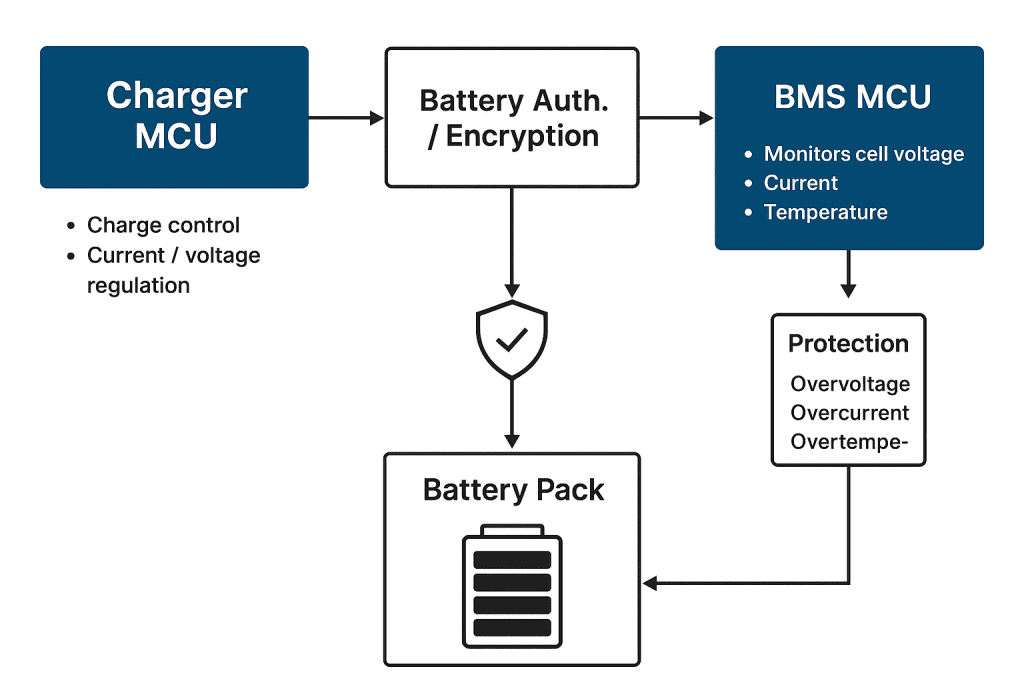
Q: How does deep learning improve battery management and performance predictions?
A: Deep learning improves battery management and performance predictions by analyzing large amounts of battery data to detect patterns, predict battery aging, and optimize charging behavior. These AI-driven models help Battery Management Systems (BMS) improve safety, accuracy, and long-term battery performance.
Traditional battery management systems rely on fixed rules and predefined charging limits. While effective, these methods may struggle to adapt to changing operating conditions or complex battery behavior. Deep learning introduces a more intelligent approach. By processing historical and real-time battery data, AI models can identify subtle relationships between voltage, current, temperature, and battery degradation.
One major benefit of deep learning is predictive maintenance. Instead of reacting after performance declines, AI models can estimate future battery health and identify early signs of failure. This capability supports advanced SOC & SOH Monitoring systems that evaluate remaining battery capacity and overall health with greater accuracy.
Deep learning also improves charging efficiency. Intelligent algorithms can adapt charging profiles based on usage patterns, environmental conditions, and battery history. These adaptive controls work together with modern Smart Charging Technology to reduce battery stress, lower heat generation, and improve charging consistency across industrial and mobility applications.
Research institutions and engineering organizations continue to study AI-based battery diagnostics and energy prediction systems. Technical publications from the National Renewable Energy Laboratory (NREL) highlight the growing role of machine learning and predictive analytics in advanced energy storage systems.
Related Question: Can deep learning completely replace traditional BMS logic?
Answer: No. Deep learning enhances battery management but does not replace core safety controls. Traditional BMS protection functions such as voltage limits, thermal protection, and current control remain essential for safe battery operation.
Q: What is the significance of real-time monitoring in battery management systems?
A: Real-time monitoring in battery management systems allows the BMS to continuously track battery voltage, current, temperature, and operating conditions. This monitoring helps prevent unsafe charging, detect abnormal behavior early, improve battery safety, and extend battery lifespan.
Battery systems constantly experience changes during charging and discharging. Without real-time monitoring, batteries may suffer from overheating, overvoltage, undervoltage, or unexpected performance loss. A modern BMS collects operating data every second and reacts immediately when conditions move outside safe limits. This fast response reduces battery stress and helps maintain stable system performance.
Real-time monitoring is also critical for predictive maintenance. By analyzing voltage patterns, charging cycles, and thermal history, intelligent systems can estimate battery aging and identify potential failures before they become serious problems. These functions support modern SOC & SOH Monitoring technologies that evaluate battery health and remaining usable capacity.
Advanced monitoring works together with Battery Safety & Protection systems to improve charging reliability and reduce operational risk. This is particularly important in industrial equipment, electric mobility, medical devices, robotics, and energy storage applications where battery failure may cause costly downtime or safety concerns.
International engineering organizations continue to support intelligent battery monitoring development. Technical research from the IEEE engineering standards organization highlights the growing role of real-time data collection, smart diagnostics, and connected battery systems in modern energy management.
Related Question: Can real-time monitoring improve battery lifespan?
Answer: Yes. Real-time monitoring reduces charging stress, detects abnormal conditions early, and supports safer operating limits, which helps improve battery cycle life and long-term reliability.
A Battery Management System (BMS) prevents overcharging and undercharging by continuously monitoring battery voltage, current, temperature, and charging status in real time. Proper BMS control is essential for maintaining battery safety, charging efficiency, and long-term battery lifespan.
During charging, the BMS monitors individual cell voltage and automatically limits or disconnects charging once preset voltage thresholds are reached. This protection mechanism prevents overcharge conditions that may cause overheating, swelling, or permanent cell damage. Advanced battery safety and protection strategies are particularly important in lithium-based battery systems.
Undercharging protection works differently. The BMS monitors discharge voltage and prevents the battery from dropping below its safe minimum level. Excessive discharge can damage battery chemistry, reduce usable capacity, and shorten cycle life. Intelligent Battery Management System (BMS) control helps maintain stable operating conditions and improves long-term reliability.
Modern BMS platforms often include cell balancing, thermal monitoring, and communication with smart chargers to coordinate charging behavior. These technologies allow chargers and batteries to work together more efficiently while reducing safety risks and performance degradation.
International safety organizations such as IEC international standards emphasize voltage protection, thermal control, and battery monitoring as critical requirements for safe rechargeable battery systems.
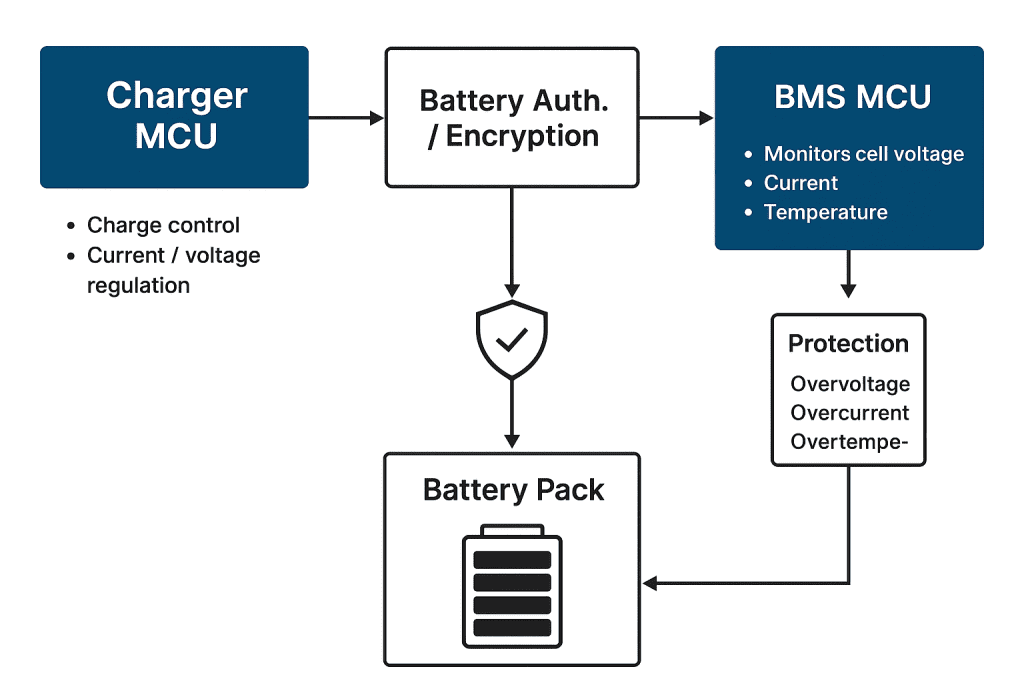
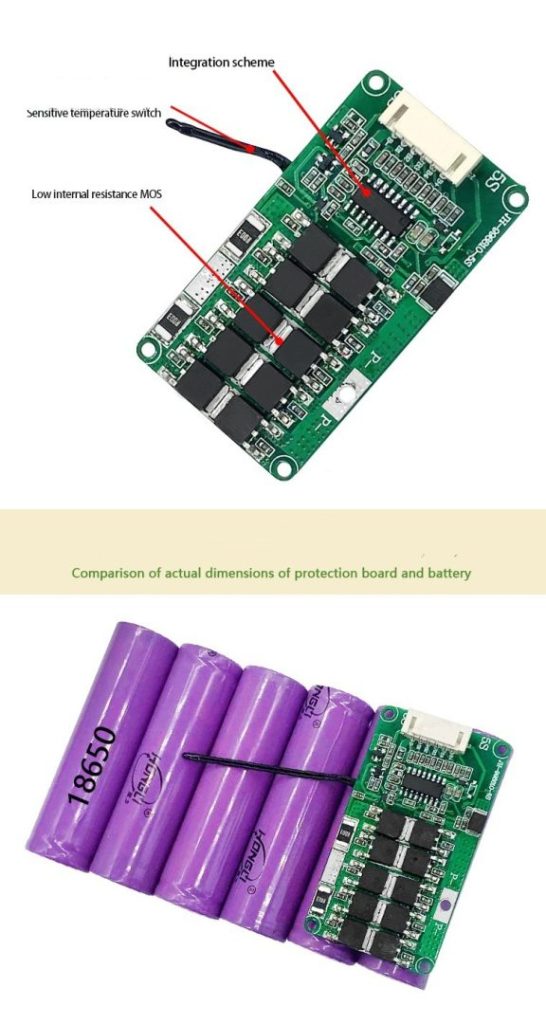
Battery health naturally degrades over time due to chemical aging, charging stress, temperature exposure, and repeated charge-discharge cycles. Battery degradation typically appears as reduced capacity, shorter runtime, voltage instability, and increased internal resistance. These changes affect both lithium-ion and LiFePO4 battery systems used in industrial, mobility, and energy storage applications.
A modern Battery Management System (BMS) helps slow battery degradation by continuously monitoring and controlling key operating conditions. The BMS tracks voltage, current, temperature, and cell balance to ensure the battery operates within safe limits. By preventing overcharging, deep discharge, overheating, and cell imbalance, a BMS significantly improves battery lifespan and charging reliability.
Advanced BMS platforms increasingly use predictive analytics, impedance monitoring, and real-time diagnostics to identify early signs of battery aging. These intelligent systems can detect abnormal battery behavior before severe damage occurs, helping reduce maintenance costs and improve long-term performance.
Battery temperature management is especially important. Excessive heat accelerates chemical degradation and shortens battery life. You may also want to read our related FAQ on why thermal management is critical in battery charging systems to understand how heat affects charging safety and battery durability.
According to the National Renewable Energy Laboratory (NREL), battery aging is influenced by cycling patterns, operating temperature, and charging conditions, making intelligent battery management increasingly important for modern power systems.
Frequently Asked Questions
Q1: Can a BMS completely stop battery aging?
No. Battery aging is a natural electrochemical process. However, a BMS can significantly slow degradation by controlling charging behavior, thermal conditions, and cell balancing.
Q2: What causes batteries to lose capacity over time?
Common causes include high temperatures, overcharging, deep discharge, rapid charging, and repeated charge cycles that increase internal resistance and reduce active battery material.
Battery management systems (BMS) continue to evolve as battery-powered devices become smarter and more connected. Modern BMS technology does more than protect batteries from overcharging or overheating. It now supports data analysis, predictive maintenance, and intelligent charging control.
Several major trends are shaping the future of battery management systems.
1. AI and Machine Learning
AI and machine learning help BMS platforms analyze battery behavior and charging patterns. These technologies improve charging efficiency and help predict battery aging. Smarter charging logic reduces battery stress and supports longer service life.
2. IoT and Remote Monitoring
IoT connectivity allows engineers and operators to monitor batteries remotely. Users can track voltage, temperature, and charging status in real time. Remote monitoring is increasingly important for electric mobility, industrial equipment, and energy storage systems.
3. Predictive Maintenance and Digital Twins
Modern BMS platforms use predictive analytics to identify early signs of battery failure. Digital twin technology can simulate battery behavior under different operating conditions. This approach helps reduce downtime and improves maintenance planning.
4. Improved SOC and SOH Monitoring
Accurate State of Charge (SOC) and State of Health (SOH) monitoring remain essential. Better monitoring helps chargers and BMS platforms make safer charging decisions. It also improves battery lifecycle management and operating reliability.
5. Smarter Charger and BMS Communication
Modern chargers communicate directly with BMS systems. This communication allows better voltage control, thermal protection, and cell balancing. Intelligent charger integration improves charging efficiency and reduces battery safety risks.
Battery technologies continue to advance across mobility, robotics, industrial equipment, and connected energy systems. As a result, BMS technology will become even smarter and more data-driven in the future.
Related Topics
Smart Charging Technology
SOC & SOH Monitoring
Battery Management System (BMS)
External References
Battery University – Battery Management System (BMS)
MDPI Batteries Journal – Battery Management Systems Research