
As battery systems become more complex, charging is no longer an isolated function. Instead, modern chargers increasingly rely on real-time data from the battery itself. For this reason, smart battery chargers with BMS communication are now widely adopted in industrial and OEM applications.
Rather than operating blindly, a charger connected to a BMS can adjust current, voltage, and charging stages dynamically. As a result, safety improves while battery lifespan extends significantly.
Why BMS communication changes charger behavior?
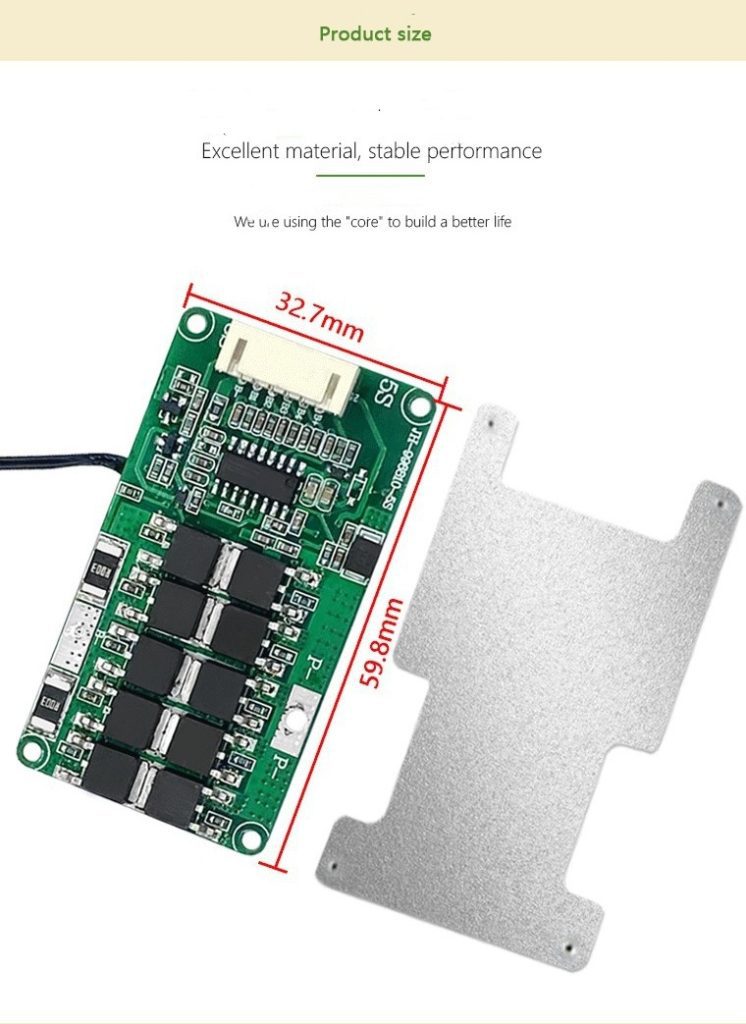
Traditional chargers follow preset voltage and current curves. However, they cannot react to internal battery conditions such as cell imbalance, temperature rise, or abnormal voltage drift. In contrast, a smart charger that communicates with the BMS responds immediately to these variables.
This approach is especially valuable in custom battery charger projects, where battery configurations vary from one customer to another.
Role of STM32 in charging control
In many designs, STM32 microcontrollers handle the core charging logic. They process feedback from the BMS, manage charging stages, and record operational data for traceability. Because of this flexibility, STM32 platforms are well suited for scalable OEM designs.
Additionally, STM32 allows seamless integration with different battery chemistries, including lithium-ion and LiFePO4 systems, which are commonly found in LiFePO4 battery charger solutions.
ESP32 for communication and connectivity
While STM32 focuses on control, ESP32 often serves as the communication bridge. It enables Wi-Fi or Bluetooth connectivity, allowing chargers to transmit data to local interfaces or cloud platforms.
Consequently, users can monitor charging status, fault logs, and battery health without direct physical access. This capability becomes critical in fleet-based or distributed equipment environments.
Smart charging across different battery formats
BMS-enabled chargers are not limited to a single battery format. They are widely used with cylindrical cells, prismatic packs, and assembled battery modules. For example, lithium packs based on 18650 or 21700 cells benefit greatly from cell-level monitoring during charging.
In such cases, intelligent chargers complement the battery architecture, similar to the systems used in industrial battery charger applications.
Designing for future expansion
A smart battery charger with BMS communication is not only about current performance. More importantly, it prepares the product for future upgrades. Firmware updates, new communication protocols, and additional monitoring features can all be implemented without redesigning the hardware.
For OEM customers planning long product lifecycles, this adaptability often determines whether a charging platform remains competitive.
