
High-capacity battery packs play a critical role in modern industrial, energy storage, and smart mobility systems. As battery capacities increase from 5Ah to 20Ah and beyond, the charging system must handle higher current levels, longer charge cycles, and stricter safety requirements. For this reason, OEM manufacturers increasingly rely on custom battery charger designs instead of generic charging solutions.
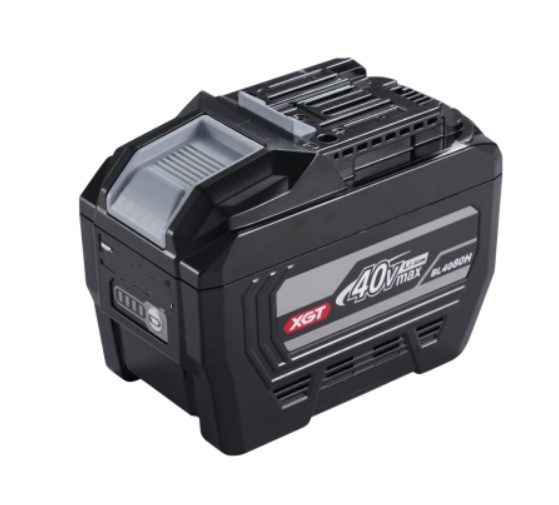
custom battery charger for 10Ah and 20Ah battery systems
BMS integrated charger for high capacity batteries
industrial high current battery charger design
OEM high capacity battery charger architecture
This technical specification explains how engineers design custom battery chargers for high-capacity battery packs, focusing on electrical performance, thermal management, and system-level integration.
Understanding high-capacity battery pack requirements
High-capacity battery packs typically use parallel cell configurations to increase available energy. For example, lithium-based packs built with 18650 or 21700 cells often combine multiple cells per series group. As a result, the charger must deliver higher output current while maintaining accurate voltage control.
Because these packs store significantly more energy, charging errors can lead to excessive heat generation or long-term cell degradation. Therefore, engineers usually avoid fixed-parameter chargers and instead specify a custom battery charger tailored to the exact pack configuration.
Charging current control for 5Ah–20Ah batteries
When battery capacity increases, charging current becomes a key design variable. Higher current shortens charging time, but it also raises thermal and electrical stress. Consequently, a custom charger must balance speed and safety carefully.
In practice, engineers implement programmable current limits that adjust dynamically during the charging process. For instance, the charger may deliver higher current during the initial constant-current stage, then gradually reduce output as the battery approaches full charge. This strategy protects the cells while maintaining acceptable charging time.
Thermal considerations during high-current charging
Thermal behavior strongly influences charging performance in high-capacity battery systems. As current increases, internal resistance causes additional heat generation. Therefore, temperature feedback becomes essential.
Modern charger designs continuously monitor temperature sensors located inside the battery pack. If temperature rises beyond a defined threshold, the charger actively reduces output current. This approach prevents thermal runaway and improves long-term battery reliability.
Voltage accuracy and charge termination
High-capacity battery packs require the same voltage precision as smaller packs, but the consequences of error are greater. Even a small over-voltage condition, when applied to a large-capacity pack, can accelerate aging across all cells.
For this reason, engineers implement high-resolution voltage sensing and strict charge termination logic. This logic ensures that the charger stops or transitions to a maintenance mode as soon as the battery reaches its target voltage.
Such precision typically appears in smart battery charger systems that use programmable microcontrollers instead of analog-only control circuits.
Integration with BMS for high-capacity packs
As battery capacity increases, the role of the Battery Management System becomes even more important. The BMS monitors individual cell groups, detects imbalance, and reports fault conditions. However, the BMS alone cannot control charging behavior.
Therefore, engineers design the charger and BMS as a coordinated system. Through communication interfaces such as UART, CAN, or RS485, the BMS shares real-time data with the charger. Based on this information, the charger adjusts current, voltage, or charging stages dynamically.
This system-level approach aligns with best practices described by Battery University and industrial power standards published by the International Electrotechnical Commission .
Scalability across different battery chemistries
Although this specification focuses on high-capacity packs, the same charger platform often supports multiple battery chemistries. By adjusting firmware parameters, engineers can adapt one hardware design to lithium-ion, LiFePO4, or even lead-acid batteries.
This flexibility reduces development cost and simplifies certification processes. Consequently, many OEMs prefer a unified charger platform for different product lines.
Such designs frequently appear in industrial battery charger applications where long-term product consistency is critical.
Design considerations for OEM customization
OEM customization extends beyond electrical parameters. Mechanical form factor, connector selection, communication protocols, and firmware features all influence the final charger design.
Therefore, engineers typically define charger requirements early in the product development cycle. By doing so, they ensure that the charger supports current battery specifications while remaining compatible with future upgrades.
Conclusion: why high-capacity batteries require custom chargers
High-capacity battery packs demand more than increased power output. They require precise current control, accurate voltage regulation, robust thermal management, and seamless BMS integration. Generic chargers rarely meet all these requirements.
In contrast, a custom battery charger designed for 5Ah–20Ah packs provides the control and flexibility needed for modern industrial and energy storage systems. As battery capacities continue to grow, custom charger design will remain a key factor in system reliability and performance.
