You customise a LiFePO4 battery charger by defining the voltage accuracy, current control strategy, and BMS communication rules based on the target system, rather than using a generic lithium charging profile.
This approach ensures the charger works as a controlled energy module instead of a simple power source. In industrial and energy storage environments, LiFePO4 batteries operate under long duty cycles, variable loads, and strict safety requirements. Therefore, charger customisation must start at the system design level.
Why LiFePO4 Batteries Require a Custom Charging Strategy
LiFePO4 chemistry differs fundamentally from other lithium-based batteries. Although it offers excellent thermal stability and long cycle life, it also demands precise voltage control during charging.
For this reason, a custom LiFePO4 battery charger must maintain tight voltage tolerances during the constant-voltage stage. Even small deviations can reduce usable capacity or trigger unnecessary BMS protection events.
Compared with generic lithium-ion chargers, LiFePO4 chargers prioritise stability and consistency over aggressive fast charging. As a result, system reliability improves significantly in industrial applications.
System-Level Design: Charger, Battery, and BMS as One Unit
In professional systems, the charger, battery pack, and BMS should never be designed independently. Instead, engineers treat them as a single energy control loop.
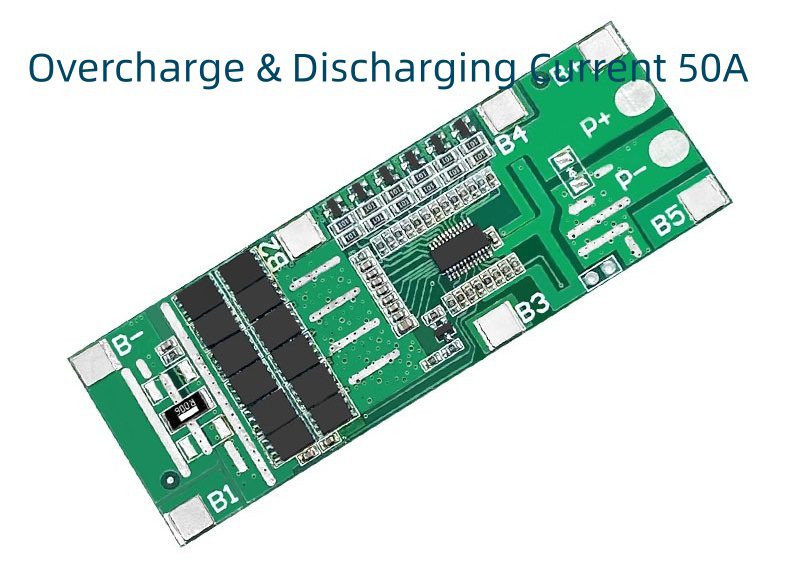
By integrating the charger with the BMS from the beginning, the system gains real-time visibility into cell voltage, temperature, and protection status. Consequently, the charger can adapt its output dynamically rather than relying on fixed parameters.
This design philosophy is commonly applied in custom battery charger solutions developed for energy storage cabinets, industrial equipment, and smart mobility platforms.
Voltage Configuration for LiFePO4 Battery Systems
LiFePO4 battery systems cover a wide range of nominal voltages, from low-voltage control packs to high-voltage energy storage modules. Therefore, charger voltage configuration must align precisely with the battery structure.
For example, a 12.8V LiFePO4 pack requires different termination behaviour than a 51.2V or 76.8V system. A custom charger defines voltage thresholds at the cell and pack levels, ensuring accurate charge completion without overcharging.
Phonix Technology supports wide voltage platforms that allow engineers to scale designs efficiently while preserving LiFePO4-specific charging accuracy.
Current Control and Battery Capacity Matching
Battery capacity plays a critical role in charger design. Industrial LiFePO4 systems often range from small-capacity packs used in control units to large-capacity modules used in energy storage.
A charger designed for 3Ah or 5Ah packs focuses on controlled current limits, while systems using 10Ah, 20Ah, or higher capacities require scalable power stages. Matching charge current to battery capacity improves efficiency and extends battery lifespan.
This principle applies across different form factors, including cylindrical cells used in custom 18650 battery charger and custom 21700 battery charger projects.
How BMS Communication Enhances LiFePO4 Charging Safety
BMS communication transforms a LiFePO4 charger into an intelligent energy controller. Through digital interfaces, the BMS provides continuous feedback on cell conditions.
As a result, the charger responds immediately to temperature changes, cell imbalance, or protection triggers. Instead of shutting down abruptly, the system adjusts output smoothly, improving operational stability.
This adaptive behaviour is a key advantage of BMS-integrated charging systems used in industrial and AIoT applications.
Charging Profiles for Industrial LiFePO4 Applications
Industrial environments impose unique demands on charging behaviour. Chargers must operate reliably under fluctuating input power, ambient temperature changes, and continuous use.
Custom LiFePO4 chargers implement tailored charging profiles that balance speed and longevity. Rather than maximising current at all times, the charger adjusts dynamically to protect both the battery and surrounding electronics.
This approach reduces stress on power components and improves long-term system reliability.
Safety Architecture in Custom LiFePO4 Chargers
Safety cannot rely on a single protection layer. Instead, professional designs distribute protection across hardware, firmware, and communication logic.
Over-voltage, over-current, and thermal protection operate simultaneously at the charger and BMS levels. If one layer reaches its limit, another layer responds immediately, preventing cascading failures.
Where Custom LiFePO4 Chargers Are Commonly Used
Custom LiFePO4 battery chargers are widely used in energy storage systems, industrial automation equipment, backup power solutions, and smart mobility platforms.
In these applications, charging stability directly affects system uptime and operational cost. A well-designed charger ensures predictable performance even under demanding conditions.
Why Phonix Technology Focuses on LiFePO4 Customisation
Phonix Technology designs LiFePO4 battery chargers as part of complete energy systems. Rather than adapting generic designs, engineers customise voltage ranges, current limits, and communication protocols based on real application requirements.
This system-driven approach delivers reliable, scalable, and application-specific charging solutions for industrial and energy storage customers worldwide.