Skip to content
Phonix logo brand : Phonix

Smart Charger

  • Home
  • ChargerExpand
    • Lead-acid Battery ChargerExpand
      • 14.4V Lead-acid Battery Charger for 12V Battery Packs
      • 29.2V Lead-acid Battery Charger for 24V Battery Packs
      • 43.8V Lead-acid Battery Charger for 36V Battery Packs
      • 57.6V Lead-acid Battery Charger for 48V Battery Packs
      • 72V Lead-acid Battery Charger for 60V Battery Packs
      • 86.4V Lead-acid Battery Charger for 72V Battery Packs
    • Li-ion Battery ChargerExpand
      • 4.2V Charger for 1S 3.7V Battery
      • 8.4V Charger for 2S 7.4V Battery
      • 12.6V Charger for 3S 11.1V Battery
      • 16.8V Charger for 4S 14.8V Battery
      • 21V Charger for 5S 18.5V Battery
      • 25.2V Charger for 6S 22.2V Battery
      • 29.4V Charger for 7S 25.9V Battery
      • 33.6V Charger for 8S 29.6V Battery
      • 37.8V Charger for 9S 33.3V Li-ion Battery
      • 42V Charger for 10S 37V Battery
      • 46.2V Charger for 11S 40.7V Battery
      • 50.4V Charger 12S 44.4V Battery
      • 54.6V Charger for 13S 48V Battery
      • 58.8V Charger for 14S 51.8V Battery
      • 63V Charger For 15S 55.5V Battery
      • 67.2V Charger For 16S 59.2V Battery
      • 71.4V Charger For 17S 62.9V Battery
      • 75.6V Charger for 18S 66.6V Battery
      • 84V Charger for 20S 74V Battery
    • LiFePO₄ Battery ChargerExpand
      • 3.65V LiFePO₄ Battery Charger (1S 3.2V LFP Cells)
      • 7.3V LiFePO₄ Battery Charger (2S 6.4V LFP Packs)
      • 11V LiFePO₄ Battery Charger (3S 9.6V LFP Packs)
      • 14.6V LiFePO₄ Battery Charger (4S 12.8V LFP Packs)
      • 18.25V LiFePO₄ Battery Charger (5S 16V LFP Packs)
      • 21.9V LiFePO₄ Battery Charger (6S 19.2V LFP Packs)
      • 25.55V LiFePO₄ Battery Charger (7S 22.4V LFP Packs)
      • 29.2V LiFePO₄ Battery Charger (8S 25.6V LFP Packs)
      • 33.3V LiFePO₄ Battery Charger (9S 28.8V LFP Packs)
      • 36.5V LiFePO₄ Battery Charger (10S 32V LFP Packs)
      • 40.15V LiFePO₄ Battery Charger (11S 35.2V LFP Packs)
      • 43.8V LiFePO₄ Battery Charger (12S 38.4V LFP Packs)
      • 47.45V LiFePO₄ Battery Charger (13S 41.6V LFP Packs)
      • 51.1V LiFePO₄ Battery Charger (14S 44.8V LFP Packs)
      • 54.8V LiFePO₄ Battery Charger (15S 48V LFP Packs)
      • 58.4V LiFePO₄ Battery Charger (16S 51.2V LFP Packs)
      • 62.05V LiFePO₄ Battery Charger (17S 54.4V LFP Packs)
      • 65.7V LiFePO₄ Battery Charger (18S 57.6V LFP Packs)
      • 69.35V LiFePO₄ Battery Charger (19S 60.8V LFP Packs)
      • 73V LiFePO₄ Battery Charger (for 20S 64V LFP Packs)
    • Ni-MH battery chargers
    • PD Fast Charger
    • AC-DC Power Adapter
  • BMSExpand
    • Lithium Battery BMS
    • LiFePO4 Battery BMS
    • Lead Acid Battery BMS
    • NiMH Battery BMS
  • CustomExpand
    • Customization Service
    • Charging System Design
    • Custom Charger Development
    • ODM / OEM Implementation
  • ResourcesExpand
    • Smart Charging Systems
    • Safe Charging Architecture
    • Extreme Environment Charging
    • Energy & Solar Charging
    • Integrated Charging Solutions
  • Contact
Phonix logo brand : Phonix
Smart Charger

LiFePO4 Smart Charger Voltage and Safety Analysis

Home / LiFePO4 Smart Charger Voltage and Safety Analysis

Compared with conventional lithium-ion batteries, LiFePO4 (Lithium Iron Phosphate) batteries offer higher thermal stability and longer cycle life. However, these advantages do not mean that LiFePO4 charging is forgiving. On the contrary, voltage accuracy and safety coordination are even more critical in LiFePO4 smart battery charger design.

This article analyzes LiFePO4 smart charger design from an engineering and system-safety perspective, focusing on voltage profiles, protection logic, and industrial reliability.
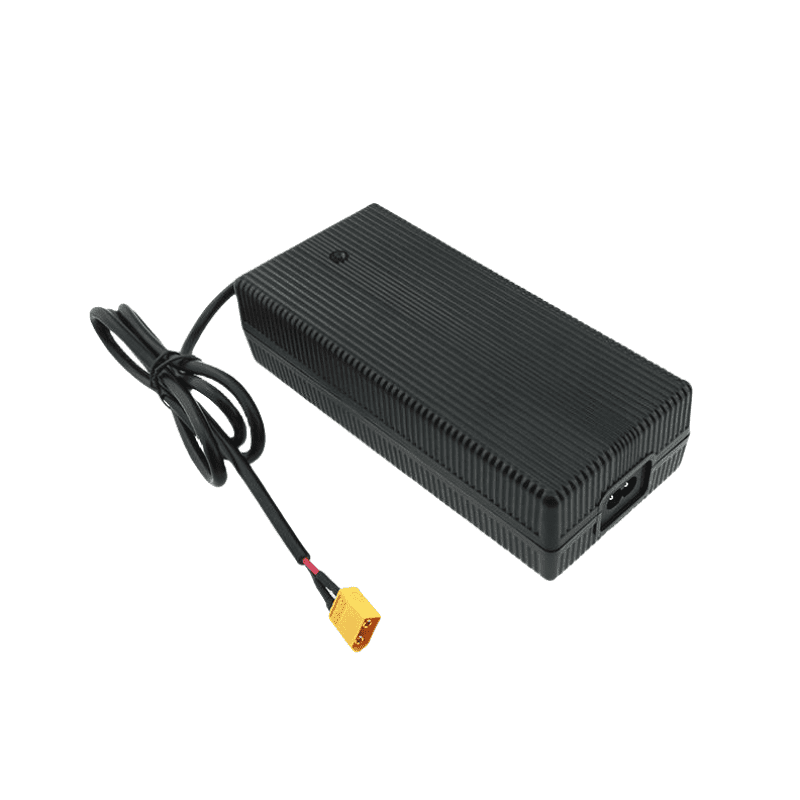
LiFePO₄ Battery Charger 3.2V per cell and a charging voltage of 3.65V per cell — or any multiple thereof (e.g., 12.8V / 14.6V, 25.6V / 29.2V, 51.2V / 58.4V, 76.8V / 87.6V).

Understanding the LiFePO4 Charging Voltage Profile

A typical LiFePO4 cell has a nominal voltage of 3.2V, with a recommended full-charge voltage of approximately 3.65V per cell.

At the pack level, this results in common charger voltages such as:

  • 12.8V systems (4S): 14.6V charging voltage
  • 25.6V systems (8S): 29.2V charging voltage
  • 48V-class systems (16S): 58.4V charging voltage

Unlike standard lithium-ion chemistries, LiFePO4 exhibits a very flat voltage curve, which makes voltage-based state estimation more challenging for smart chargers.


Why Voltage Accuracy Matters More Than You Expect

LiFePO4 cells are often marketed as “safe,” but overvoltage at the pack level can still cause:

  • Accelerated capacity degradation
  • Cell imbalance amplification
  • BMS-triggered charge interruptions

In industrial smart battery chargers, maintaining tight voltage tolerance (typically ±0.5%) is essential, especially for multi-series packs used in mobility and energy storage applications.


CC/CV Control Differences vs Conventional Lithium-ion

While LiFePO4 chargers also use a CC/CV strategy, the control behavior differs from typical lithium-ion designs:

AspectLiFePO4Conventional Li-ion
Voltage PlateauVery flatGradual slope
CV DurationShorterLonger
Charge Termination SensitivityHighModerate

This behavior requires smart chargers to rely on current taper and timing logic rather than voltage change alone.


Safety Coordination Between Charger and BMS

Most LiFePO4 battery packs integrate a BMS with strict protection thresholds. In practice, charging safety depends on coordination rather than redundancy.

Common coordination models include:

  • BMS-controlled charge enable signal
  • Charger-side voltage and current limits
  • Temperature-based derating shared by both systems

Poor coordination often leads to repeated charge cutoffs, which users may misinterpret as charger failure.


Thermal Behavior in LiFePO4 Smart Chargers

Although LiFePO4 cells tolerate heat better than other lithium chemistries, charger-side thermal stress remains a limiting factor.

Key thermal design considerations include:

  • High current operation at low voltage differentials
  • Enclosure heat dissipation under continuous charge
  • Component derating for industrial ambient temperatures

Smart chargers typically implement thermal sensors and firmware-controlled current reduction to ensure long-term reliability.


MCU-Based Control for LiFePO4 Charging

Given the flat voltage profile and strict termination requirements, most industrial LiFePO4 smart chargers adopt MCU-based control.

This enables:

  • Precise voltage calibration
  • Adaptive charge termination logic
  • Communication with external systems or BMS

Fixed-function charging ICs may be sufficient for consumer products, but often lack flexibility for OEM and industrial deployments.


Common Design Pitfalls

  • Using lithium-ion voltage thresholds for LiFePO4 packs
  • Over-reliance on voltage-based SOC estimation
  • Ignoring BMS-triggered charge interruptions
  • Insufficient validation under partial-charge scenarios

These issues frequently appear during field operation rather than in initial lab testing.


Conclusion

LiFePO4 smart charger design demands precise voltage control, well-coordinated safety logic, and robust thermal management.

In industrial and OEM systems, a charger is not merely a power source but a control element within the battery ecosystem. Proper engineering decisions at this stage directly affect system reliability, lifespan, and user perception.

Subsequent articles will examine how these principles scale to higher voltages, wider input ranges, and system-level integrations.

Global Markets

USA
Canada
Mexico

Germany
United Kingdom
France
Italy

Australia
New Zealand

Brazil
Chile
Argentina

China
Japan
South Korea
India

Singapore
Malaysia
Thailand
Philippines

UAE
Saudi Arabia
Qatar

South Africa
Egypt
Kenya

RESOURCES

  • ABOUT
  • BLOG
  • FAQ
  • PRIVACY

SOCIALS

  • Facebook
  • Linkedin
  • Youtube
  • X

© 2026 Smart Charger

Inquiry Now
Contact form
  • Home
  • Charger
    • Lead-acid Battery Charger
      • 14.4V Lead-acid Battery Charger for 12V Battery Packs
      • 29.2V Lead-acid Battery Charger for 24V Battery Packs
      • 43.8V Lead-acid Battery Charger for 36V Battery Packs
      • 57.6V Lead-acid Battery Charger for 48V Battery Packs
      • 72V Lead-acid Battery Charger for 60V Battery Packs
      • 86.4V Lead-acid Battery Charger for 72V Battery Packs
    • Li-ion Battery Charger
      • 4.2V Charger for 1S 3.7V Battery
      • 8.4V Charger for 2S 7.4V Battery
      • 12.6V Charger for 3S 11.1V Battery
      • 16.8V Charger for 4S 14.8V Battery
      • 21V Charger for 5S 18.5V Battery
      • 25.2V Charger for 6S 22.2V Battery
      • 29.4V Charger for 7S 25.9V Battery
      • 33.6V Charger for 8S 29.6V Battery
      • 37.8V Charger for 9S 33.3V Li-ion Battery
      • 42V Charger for 10S 37V Battery
      • 46.2V Charger for 11S 40.7V Battery
      • 50.4V Charger 12S 44.4V Battery
      • 54.6V Charger for 13S 48V Battery
      • 58.8V Charger for 14S 51.8V Battery
      • 63V Charger For 15S 55.5V Battery
      • 67.2V Charger For 16S 59.2V Battery
      • 71.4V Charger For 17S 62.9V Battery
      • 75.6V Charger for 18S 66.6V Battery
      • 84V Charger for 20S 74V Battery
    • LiFePO₄ Battery Charger
      • 3.65V LiFePO₄ Battery Charger (1S 3.2V LFP Cells)
      • 7.3V LiFePO₄ Battery Charger (2S 6.4V LFP Packs)
      • 11V LiFePO₄ Battery Charger (3S 9.6V LFP Packs)
      • 14.6V LiFePO₄ Battery Charger (4S 12.8V LFP Packs)
      • 18.25V LiFePO₄ Battery Charger (5S 16V LFP Packs)
      • 21.9V LiFePO₄ Battery Charger (6S 19.2V LFP Packs)
      • 25.55V LiFePO₄ Battery Charger (7S 22.4V LFP Packs)
      • 29.2V LiFePO₄ Battery Charger (8S 25.6V LFP Packs)
      • 33.3V LiFePO₄ Battery Charger (9S 28.8V LFP Packs)
      • 36.5V LiFePO₄ Battery Charger (10S 32V LFP Packs)
      • 40.15V LiFePO₄ Battery Charger (11S 35.2V LFP Packs)
      • 43.8V LiFePO₄ Battery Charger (12S 38.4V LFP Packs)
      • 47.45V LiFePO₄ Battery Charger (13S 41.6V LFP Packs)
      • 51.1V LiFePO₄ Battery Charger (14S 44.8V LFP Packs)
      • 54.8V LiFePO₄ Battery Charger (15S 48V LFP Packs)
      • 58.4V LiFePO₄ Battery Charger (16S 51.2V LFP Packs)
      • 62.05V LiFePO₄ Battery Charger (17S 54.4V LFP Packs)
      • 65.7V LiFePO₄ Battery Charger (18S 57.6V LFP Packs)
      • 69.35V LiFePO₄ Battery Charger (19S 60.8V LFP Packs)
      • 73V LiFePO₄ Battery Charger (for 20S 64V LFP Packs)
    • Ni-MH battery chargers
    • PD Fast Charger
    • AC-DC Power Adapter
  • BMS
    • Lithium Battery BMS
    • LiFePO4 Battery BMS
    • Lead Acid Battery BMS
    • NiMH Battery BMS
  • Custom
    • Customization Service
    • Charging System Design
    • Custom Charger Development
    • ODM / OEM Implementation
  • Resources
    • Smart Charging Systems
    • Safe Charging Architecture
    • Extreme Environment Charging
    • Energy & Solar Charging
    • Integrated Charging Solutions
  • Contact
Search