
Yes. LiFePO4 batteries should be charged with a charger specifically designed for lithium iron phosphate chemistry. While some lead-acid chargers or generic lithium chargers may appear to work, they often use different charging voltages, charging algorithms, and maintenance modes that can reduce battery performance, trigger Battery Management System (BMS) protection, or shorten battery lifespan.
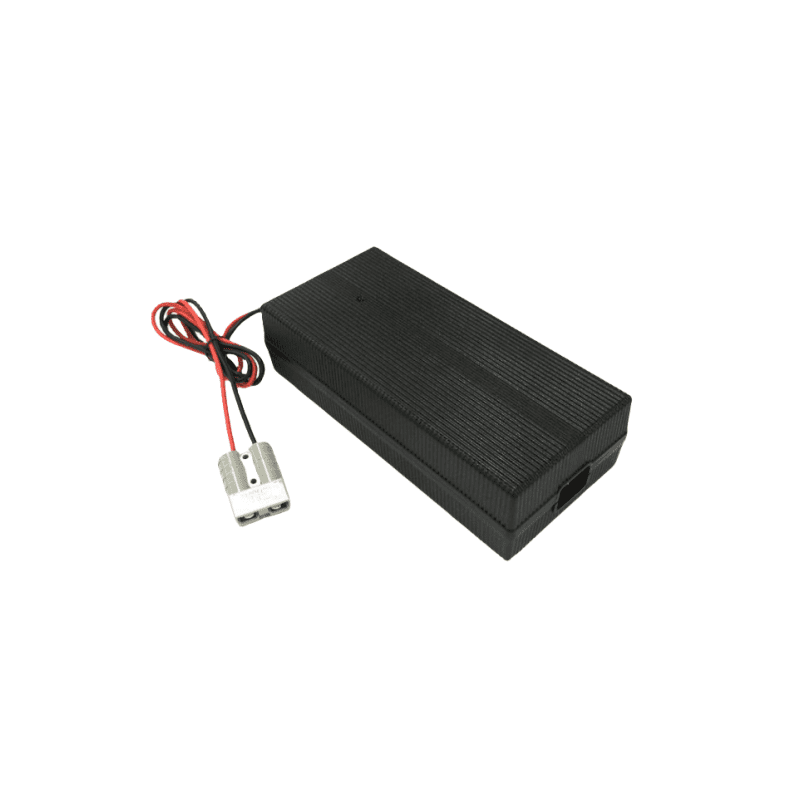
For OEM equipment, industrial machinery, energy storage systems, robotics, floor care equipment, medical devices, and electric mobility products, using a dedicated LiFePO4 charger is generally considered best engineering practice rather than an optional upgrade.
Many companies first encounter this question when replacing lead-acid batteries with LiFePO4 battery packs. On paper, the transition appears simple. The battery compartment remains unchanged, the operating voltage looks similar, and the advertised cycle life is dramatically better. However, what often gets overlooked is the charging system itself.
A battery may store energy, but the charger determines how that battery is treated every day. Over thousands of charging cycles, charging accuracy has a direct impact on battery lifespan, reliability, operating costs, and overall system performance.
One of the most common misconceptions is that matching nominal voltage automatically guarantees charger compatibility. In reality, LiFePO4 batteries follow a charging profile that differs significantly from traditional lead-acid batteries.
Lead-acid chargers typically rely on bulk, absorption, and float charging stages. LiFePO4 batteries, however, are designed around a precise Constant Current / Constant Voltage (CC/CV) charging method. Even when two battery systems appear to share a similar voltage range, their charging requirements can be completely different.
This becomes especially important when evaluating battery pack configurations. The charger voltage must match the battery pack architecture.
- 10S LiFePO4 Battery Pack → 36.5V Charger
- 11S LiFePO4 Battery Pack → 40.15V Charger
- 12S LiFePO4 Battery Pack → 43.8V Charger
- 13S LiFePO4 Battery Pack → 47.5V Charger
- 14S LiFePO4 Battery Pack → 51.1V Charger
- 16S LiFePO4 Battery Pack → 58.4V Charger
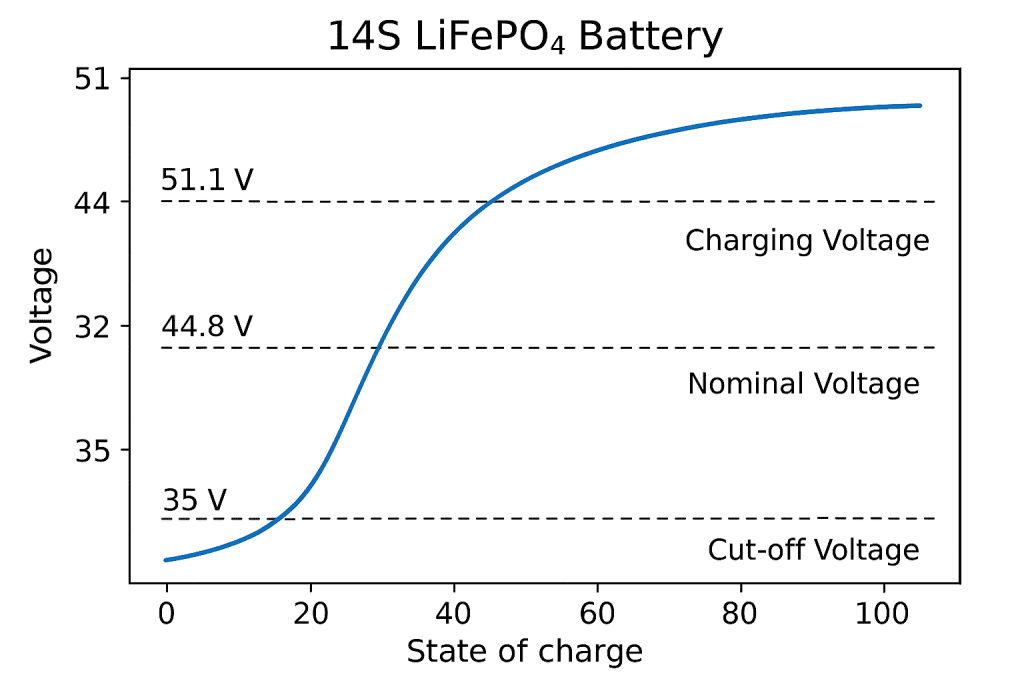
These voltages are not marketing numbers. They are determined by cell count and battery chemistry. A charger operating below the required voltage may leave the battery undercharged. A charger operating above the recommended charging voltage can increase cell stress and potentially reduce battery longevity.
For procurement managers, these technical details often translate into a much simpler business concern: total ownership cost.
Battery replacement, field maintenance, warranty claims, and unexpected downtime can easily cost more than the charger itself. A battery system expected to operate for five to ten years should not be paired with a charging solution selected solely on purchase price.
This is one reason experienced engineers rarely evaluate a battery without evaluating the charger at the same time.
Modern LiFePO4 battery packs are no longer passive energy storage devices. Most commercial battery packs contain an integrated Battery Management System (BMS) that monitors voltage, temperature, current flow, balancing conditions, and protection status. The charger and the BMS effectively work together as one charging ecosystem.
When a charger is properly matched to the battery system, charging becomes safer, more efficient, and more predictable. When charging logic and battery logic are disconnected, performance often becomes dependent on protective intervention rather than proper system design.
This is why many OEM manufacturers are moving away from generic charging solutions and adopting application-specific charging platforms.
In modern projects, the charger frequently becomes part of the product architecture itself. Communication protocols such as CAN Bus, RS485, UART, Bluetooth, WiFi, and cloud-based IoT monitoring are increasingly integrated into charger designs to support diagnostics, remote monitoring, predictive maintenance, and fleet management.
The trend is particularly visible in energy storage systems, automated guided vehicles (AGVs), autonomous mobile robots (AMRs), floor scrubbers, electric scooters, electric motorcycles, medical devices, marine applications, and industrial equipment.
A practical example can be found in floor care equipment. Many manufacturers upgrade from lead-acid batteries to LiFePO4 technology in order to reduce maintenance requirements and extend operating time. However, some projects continue using chargers originally designed for lead-acid batteries. The system may appear functional during initial testing, yet over time issues such as incomplete charging, reduced runtime, premature BMS cutoffs, and shortened battery life often emerge.
The same principle applies to energy storage systems. Whether deployed in residential ESS installations, commercial backup power systems, solar energy storage projects, or off-grid applications, battery degradation rarely results from a single catastrophic event. More commonly, it is the cumulative effect of thousands of charging cycles performed under less-than-optimal conditions.
This leads to several questions frequently asked by engineers and purchasing teams.
Can a lead-acid charger charge a LiFePO4 battery? Sometimes, yes.
Will it maximize battery lifespan and charging performance? Usually not.
Is float charging necessary for LiFePO4 batteries? In most applications, continuous float charging provides little benefit and may not align with the charging strategy recommended by battery manufacturers.
Can the BMS compensate for an unsuitable charger? Only to a limited extent. A BMS is designed as a protection system, not as a replacement for proper charger design.
The most successful battery-powered products are usually developed when battery chemistry, charger architecture, BMS logic, communication protocols, environmental conditions, certification requirements, and future scalability are considered together from the earliest stages of development.
Another factor often overlooked is product expansion. Many projects begin with a single battery platform and later expand into multiple voltage ranges. A company may launch a 24V product today and introduce 36V, 48V, or 60V variants in the future. Without a flexible charging strategy, engineering teams frequently find themselves redesigning charging hardware each time the product line grows.
Over the past two decades, one observation has remained remarkably consistent across industrial projects: battery failures are often blamed on the battery itself, while the root cause frequently originates within the charging system.
Charging accuracy, current regulation, thermal management, communication reliability, and system integration all influence battery performance far more than many people initially expect.
Organizations such as Battery University, UL Solutions, and the International Electrotechnical Commission (IEC) continue to emphasize the importance of matching charging profiles to battery chemistry and application requirements. While charging strategies may differ between applications, the underlying principle remains the same: batteries perform best when the charger is designed specifically for the battery system it supports.
Ultimately, the question is not whether a LiFePO4 battery can be charged using a generic charger. The more important question is whether that charger supports the reliability, safety, efficiency, and service life expected from the battery investment.
In professional applications, the answer is usually straightforward. The charger should be considered part of the battery system itself, not an afterthought.
Technical Exchange & Collaboration
Selecting a charging solution is rarely just a purchasing decision. It often involves balancing battery chemistry, charging voltage, communication requirements, certification pathways, operating environments, production goals, and long-term maintenance considerations.
Every project presents unique engineering challenges. Some prioritize battery longevity. Others focus on rapid charging, remote monitoring, communication integration, energy efficiency, environmental protection, or compliance with regional safety standards.
No supplier is the perfect fit for every application. However, early technical discussions frequently prevent costly mistakes later in product development.
Most charging problems are discovered after products reach the field. The most successful projects usually solve them before production ever begins.
NOTE: “The perspectives in this article are referenced from Battery University, with citations accounting for less than 10% of the content.”,
