
Lead-acid batteries remain widely used in industrial equipment, backup power systems, and mobility devices. However, charging requirements differ significantly between sealed lead-acid (SLA), wet, and dry battery types. This application note explains how a custom SLA battery charger is engineered to address these differences reliably.
Unlike generic chargers, custom designs allow precise control over voltage thresholds, charging stages, and protection logic. As a result, battery lifespan and operational safety improve significantly.
Differences between SLA, wet, and dry lead-acid batteries
Although all lead-acid batteries share similar electrochemical principles, their construction affects charging behavior. Wet batteries typically require ventilation during charging, while dry and SLA batteries rely on sealed designs with stricter voltage limits.
Because of these differences, many OEM manufacturers choose a custom battery charger solution instead of a universal power supply.
Charging stages and voltage control
A proper lead-acid charging profile usually includes bulk, absorption, and float stages. For wet batteries, the charger must prevent excessive gassing, whereas SLA batteries require tighter float voltage control to avoid internal pressure buildup.
These parameters are commonly implemented in smart battery charger platforms using programmable control firmware.
Why custom SLA chargers outperform standard chargers
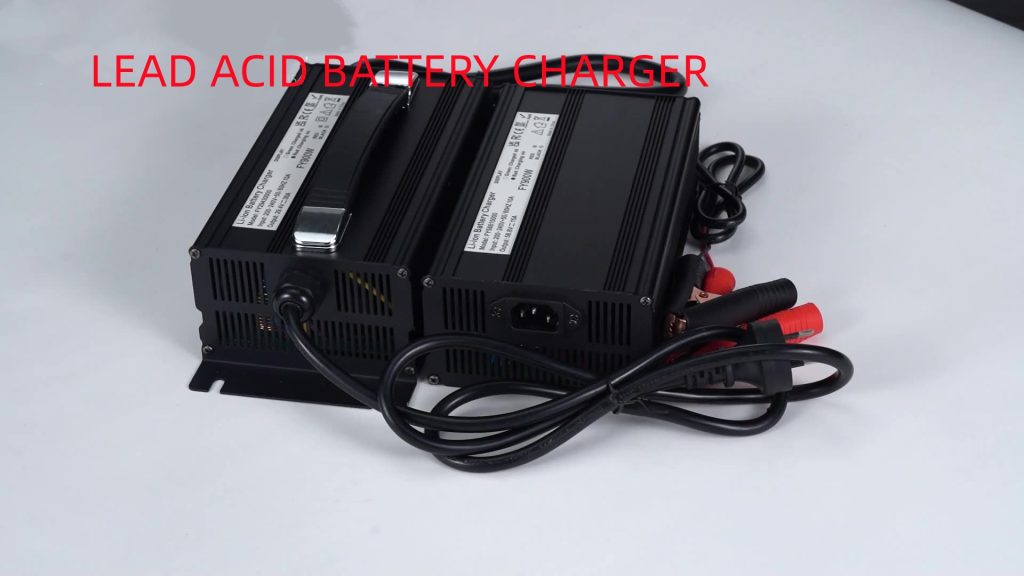
Standard chargers often apply fixed voltage levels that do not account for temperature, load conditions, or battery aging. In contrast, a custom SLA battery charger can dynamically adjust charging behavior based on real-time feedback.
This flexibility is especially important in industrial battery charger systems where batteries operate continuously or under harsh conditions.
Integration with monitoring and protection systems
Modern lead-acid charging systems increasingly include monitoring circuits for voltage, current, and temperature. When integrated with a protection module, the charger can detect abnormal conditions early and respond before damage occurs.
Design scalability for multiple lead-acid applications
A well-designed custom charger platform can support multiple lead-acid formats by firmware configuration alone. This allows OEMs to reuse the same hardware across different SLA, wet, and dry battery products, reducing development cost and certification effort.
