
Can I leave a LiFePO4 charger plugged in overnight?
Yes — you can leave a LiFePO4 battery charger plugged in overnight. But only if your charger is designed with proper CC/CV charging logic, automatic shut-off, and complies with regional safety standards such as UL (U.S.), CE (EU), or RCM (Australia).
Right choice of Charger is key!
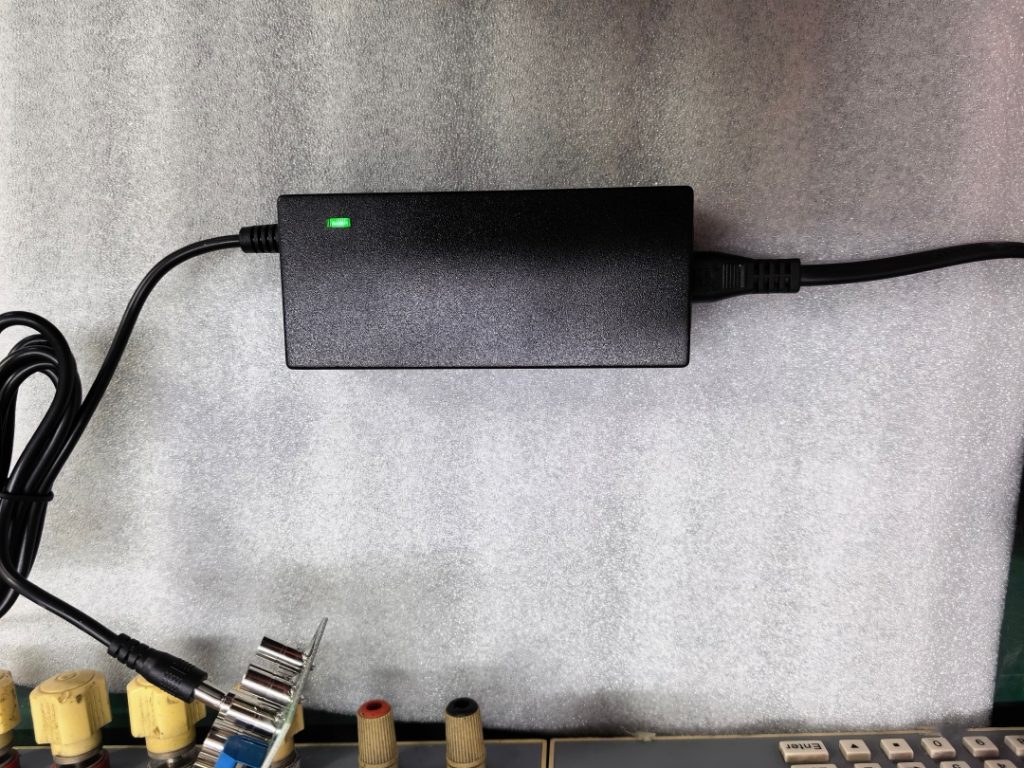
Choosing the right LiFePO4 battery charger is not just a technical decision — it directly affects system reliability, product lifespan, and operational safety.
For engineers, project managers, and ODM / OEM buyers, the challenge is never to find a charger, but rather selecting one that performs reliably in working systems — especially during long overnight charging cycles.
In applications, the battery is rarely the weak point. The real risk usually comes from the charger behavior: whether it can properly terminate charging, control temperature, and avoid continuous micro-current after full charge.
According to discussions in the Texas Instruments Power Management Forum , properly designed lithium chargers do not continuously push current after full charge — they enter controlled termination or standby mode to protect long-term battery health.
Typical Applications of LiFePO4 Battery Chargers
LiFePO4 chargers are widely used in industrial and commercial systems:
1) Industrial & Commercial Systems
- AGV / AMR autonomous robots
- Electric forklifts and warehouse equipment
- Floor cleaning machines
- Energy storage systems (ESS / UPS)
2) Mobility & Outdoor Equipment
- Golf carts and utility vehicles
- E-scooters and patrol vehicles
- Portable power stations
3) Consumer & Light Industrial
- Cordless power tools
- Cleaning systems
- Portable electronics
Each application has different priorities such as charging speed, durability, thermal stability, and certification requirements.
👉 Explore product categories:
- OEM battery charger manufacturer homepage
- industrial battery charger solutions
- LiFePO4 battery charger systems
- Li-ion battery charger solutions
How to Choose the Right LiFePO4 Battery Charger?
The best charger is not the most powerful — but rather weather it is the best compatible with your system, Key Selection Factors:
- Voltage Accuracy: Precise termination (~3.65V per cell)
- Current Rating: Proper match with battery capacity
- Protection Features: OVP / OCP / SCP
- Thermal Design: Critical for overnight and enclosed systems
- Communication: CAN / RS485 / SMBus for smart integration
- Certifications: UL / ETL / FCC (U.S.), CE (EU), RCM / SAA (AU)
A mismatch between charger and battery system may lead to instability, reduced cycle life, or certification failure during system validation.
How to Size a LiFePO4 Battery Charger?
A commonly used engineering guideline:
- Recommended charge rate: 0.2C – 0.5C
For example: 100Ah battery → 20A–50A charger
Lower current improves lifespan, while higher current reduces charging time. For overnight charging applications, around 0.3C is typically the most stable balance.
Charging Time Formula
t = C / I × 1.1
- C = battery capacity (Ah)
- I = charging current (A)
- 1.1 = efficiency factor (CV phase loss)
Industrial vs Low-Cost Chargers
| Feature | Industrial OEM Charger | Low-Cost Charger |
|---|---|---|
| Charging Logic | Full CC/CV with auto cut-off | Basic or incomplete control |
| Certification | UL / CE / RCM ready | Often missing or unclear |
| Thermal Design | Engineered for long cycles | Minimal heat control |
| BMS Integration | CAN / RS485 supported | None |
| Reliability | High MTBF industrial grade | Unpredictable long-term behavior |
Cost vs Risk Insight:
Using a non-certified charger may save a small cost per unit, but a single field failure, battery damage event, or compliance issue can result in significant warranty costs, system downtime, or certification delays.
Troubleshooting: Why Is My LiFePO4 Charger Not Working?
Common field issues include:
- BMS protection triggered (deep discharge state)
- Incorrect charger specification
- Connection resistance or oxidation
- Thermal shutdown during operation
Why Does the Charger Not Start?
Battery voltage may be too low, triggering BMS protection. Some systems require a low-voltage or activation mode.
Why Does Charging Stop Early?
Usually caused by thermal protection or incorrect current setting.
Why Does Charging Not Reach 100%?
Often related to BMS balancing behavior or premature termination threshold.
United States
- UL Listing / UL Recognized
- ETL Certification (Intertek)
- FCC Part 15
Europe
- CE Marking (LVD + EMC + RoHS)
Australia & New Zealand
- RCM Certification
- SAA Approval
Designing for UL, CE, and RCM requirements from the beginning significantly reduces certification time and redesign costs for OEM projects.
Technical Specifications (Reference Model)
| Feature | Value |
|---|---|
| Input Voltage | 90–264VAC |
| Output Voltage | 14.6V / 29.2V / 58.4V |
| Efficiency | ≥93% |
| Operating Temperature | -20°C to +50°C |
Professional OEM Solutions
In modern systems, a charger is not just a power supply — it is part of the system control architecture.
Typical OEM customization includes:
- CANopen / SAE J1939 / RS485 / SMBus communication
- Dynamic charging based on BMS status
- Mechanical customization for AGV / medical systems
- Thermal optimization for enclosed environments
- Pre-compliance support for UL / CE / RCM
👉 Learn more:
FAQ
Is it safe to charge LiFePO4 overnight?
Yes, if the charger includes proper shut-off logic and complies with safety certifications.
Can I use a lead-acid charger?
No. Voltage profiles are incompatible and may trigger BMS faults or reduce battery lifespan.
Does the charger consume power after full charge?
A properly designed charger enters standby mode with minimal power consumption (<0.5W).
Why do some chargers stop at 90–95%?
This is often due to BMS balancing behavior or conservative termination thresholds designed to extend battery life.
