
A custom 21700 battery charger differs from an 18650 charger mainly in current handling, thermal management, and charging profile optimization. Because 21700 cells store more energy and support higher discharge and charge rates, chargers must be designed with higher power margins and stricter control logic.
In short, while the charging principles are similar, a custom 21700 battery charger must accommodate increased capacity, heat generation, and system-level safety requirements.
In the previous article on custom 18650 battery charger design , we explored how cylindrical lithium cells influence charger architecture. With 21700 cells, those considerations become more pronounced due to higher energy density.
Understanding the 21700 Cell Format
The 21700 lithium-ion cell features a larger diameter and length compared to the 18650 format. This allows manufacturers to increase capacity, often reaching 4000mAh to 5000mAh per cell, depending on chemistry and construction.
Higher capacity directly affects charging current requirements. Chargers designed for 21700 cells must deliver more power without compromising voltage accuracy or thermal stability.
Why Customization Is More Important for 21700 Chargers
Off-the-shelf chargers are often optimized for legacy formats and may not fully support the electrical and thermal characteristics of 21700 cells. A custom 21700 battery charger enables precise adjustment of current limits, voltage thresholds, and termination behavior.
This is especially critical in battery packs where multiple 21700 cells are connected in series and parallel. Improper charging can lead to uneven cell stress and reduced cycle life.
Our internal reference on custom battery charger engineering workflow outlines how charger parameters are matched to specific cell formats during OEM development.
Charging Current and Thermal Management
Because 21700 cells support higher charging currents, thermal management becomes a central design challenge. Higher current leads to increased heat generation at both the cell and charger levels.
A custom charger may incorporate temperature sensors, dynamic current derating, or adaptive charging algorithms to prevent overheating. These features are rarely found in generic chargers.
CC/CV Charging Profile for 21700 Cells
Like other lithium-ion cells, 21700 batteries use a constant current / constant voltage (CC/CV) charging profile. However, current values and cutoff thresholds are often higher than those used for 18650 cells.
Precise voltage control remains essential, as exceeding the maximum charge voltage can damage the cell and trigger protection mechanisms.
For a general technical reference, the Wikipedia overview of lithium-ion battery charging behavior provides background on CC/CV charging across different cell formats.
Safety and Protection Considerations
Higher energy density increases the importance of safety features. Custom 21700 battery chargers typically integrate overvoltage, overcurrent, short-circuit, and thermal protection mechanisms.
In many applications, charger behavior must also align with the battery management system (BMS), ensuring coordinated protection at both the charger and battery levels.
Application-Specific Design Requirements
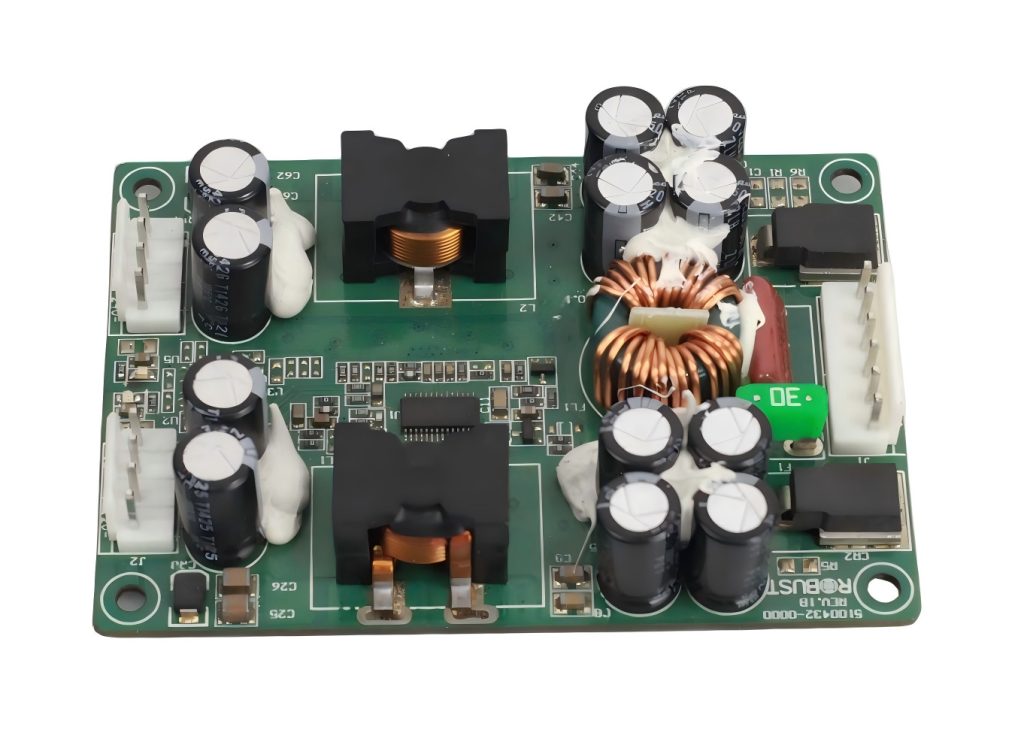
Custom 21700 chargers are commonly used in electric mobility, power tools, and energy storage systems. Each application imposes unique constraints on charging speed, thermal limits, and compliance standards.
Designing a charger around these constraints improves system reliability and reduces long-term maintenance risks.
Preparing for High-Capacity Battery Systems
As battery capacities continue to increase, charger scalability becomes an important design consideration. A well-designed custom 21700 battery charger can often be adapted to support future cell formats with minimal hardware changes.
In the next article, we will explore how chargers are adapted for different battery capacities, focusing on custom battery chargers for various mAh requirements.
