
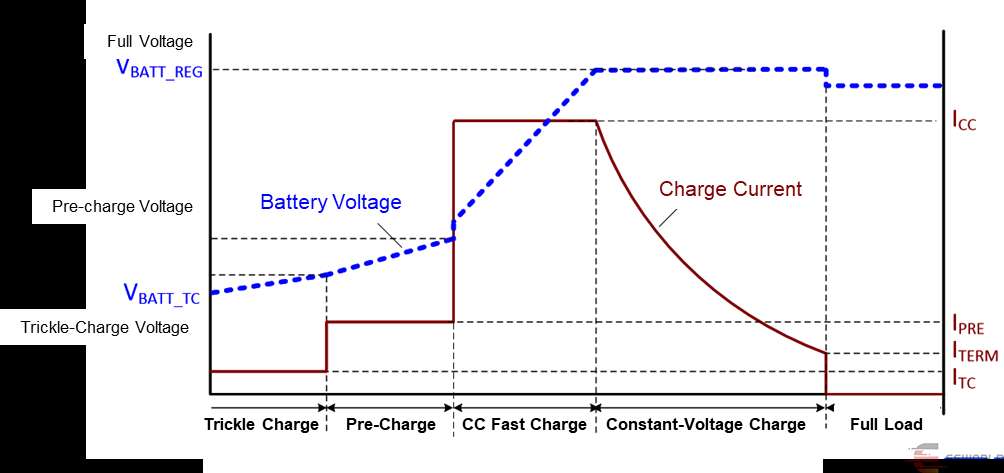
In dry battery applications, voltage control is one of the most critical factors determining both charging efficiency and battery lifespan. Unlike wet batteries, dry batteries are typically sealed and far less tolerant of voltage fluctuation during charging.
A well-designed battery charger must ensure that voltage remains within a tightly controlled window, especially during the final charging phase. Excessive voltage may accelerate internal chemical degradation, while insufficient voltage leads to incomplete charging and long-term capacity loss.
To better understand how modern chargers manage this balance, you can refer to our internal guide on intelligent charger voltage and current regulation strategies . This article explains how closed-loop control, feedback sensing, and firmware tuning work together to stabilize output voltage under varying load conditions.
Constant Voltage Charging for Dry Batteries
Most dry battery chargers adopt a constant voltage charging approach once the battery reaches its predefined voltage threshold. This method minimizes stress on the battery chemistry while ensuring a stable energy input throughout the charging cycle.
If you are comparing different charger architectures, our technical overview of smart battery charger control algorithms provides deeper insight into how voltage regulation logic is implemented at the system level.
From an industry reference perspective, the Wikipedia article on battery charging methods and voltage regulation offers a high-authority overview of constant voltage charging principles used across different battery technologies.
Why Voltage Precision Matters in Charger Design
Even small voltage deviations can significantly impact dry battery performance. High-precision voltage control improves safety margins, reduces thermal stress, and enhances compatibility across various dry battery formats.
For manufacturers and system designers, voltage accuracy becomes a decisive factor when selecting or developing a battery charger intended for long-term, reliable operation.
As charging requirements evolve, understanding voltage behavior is essential—especially when transitioning from dry battery solutions to systems that involve more complex charging dynamics.
In the next article, we will focus on wet battery charging stages, where voltage control interacts differently with electrolyte behavior and multi-stage charging processes.
