
How to design a Custom Battery Charger and BMS Integration for Industrial Systems?
In industrial battery systems, engineers rarely treat the charger as an isolated component. Instead, they design the charger and BMS as a coordinated system. This architecture improves safety, extends battery life, and simplifies long-term maintenance. Therefore, understanding charger–BMS integration plays a critical role in custom battery solutions.
Moreover, industrial applications demand predictable behavior under varying load conditions. As a result, manufacturers increasingly adopt custom battery charger architectures instead of generic power adapters.
How a custom battery charger interacts with the BMS
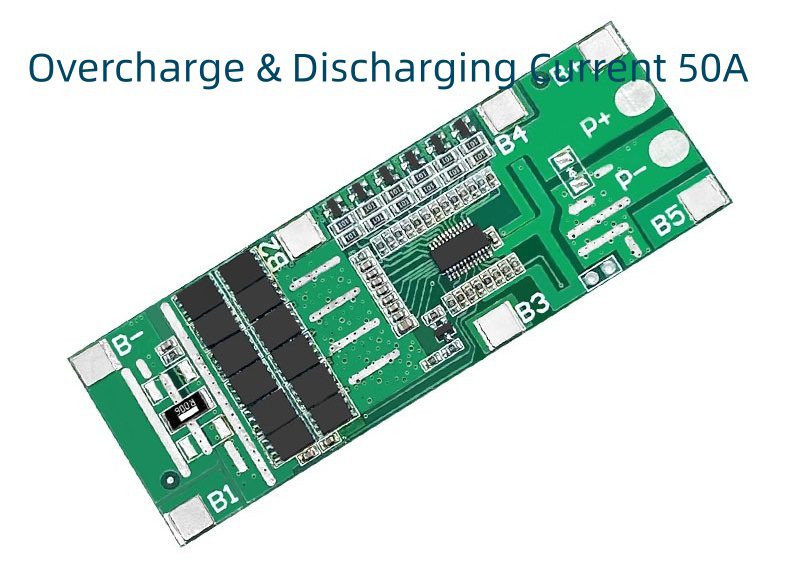
A custom battery charger actively exchanges data with the BMS during the entire charging process. For example, the BMS reports cell voltage, temperature, and fault status in real time. Based on this feedback, the charger adjusts current and voltage dynamically.
Because of this interaction, system designers often choose a custom battery charger to ensure consistent behavior across different battery chemistries.
Charge control logic and fault handling
When abnormal conditions occur, the charger responds immediately. For instance, it reduces output current if temperature rises unexpectedly. Meanwhile, the BMS isolates the battery pack if it detects critical faults. Together, these actions prevent damage and improve system reliability.
Consequently, this coordinated approach appears frequently in industrial battery charger systems designed for continuous operation.
Why system-level design outperforms standalone chargers
Standalone chargers rely on fixed parameters. However, industrial battery systems rarely operate under fixed conditions. Therefore, system-level design allows engineers to adapt charging behavior based on real-time operating data.
Furthermore, firmware-controlled platforms enable future upgrades. Engineers can update charging profiles without replacing hardware, which significantly reduces lifecycle cost.
Communication protocols in charger–BMS systems
Modern charging systems often use communication protocols such as UART, CAN, or RS485. These interfaces allow the charger and BMS to share diagnostic data, operating states, and historical records.
As a result, maintenance teams can identify issues early and schedule service before failures occur. This approach aligns with recommendations published by the International Electrotechnical Commission for industrial power systems.
Scalable architecture for multiple battery platforms
A well-designed charger–BMS architecture supports multiple battery types through configuration rather than redesign. For example, the same platform can support lithium-ion, LiFePO4, or lead-acid batteries with firmware adjustments.
Therefore, OEM manufacturers often select a unified system architecture to accelerate product development and ensure long-term consistency.
