
In lithium battery applications, the charging system must match the cell format precisely. As a result, charger designs for 18650 and 21700 lithium packs differ significantly from generic power adapters. This technical brief explains how custom battery chargers are engineered to support these cylindrical lithium cells safely and efficiently.
Although 18650 and 21700 cells share similar chemistry, their electrical and thermal behaviors vary under high current conditions. Therefore, charger parameters must be adjusted accordingly.
Understanding 18650 and 21700 battery pack characteristics
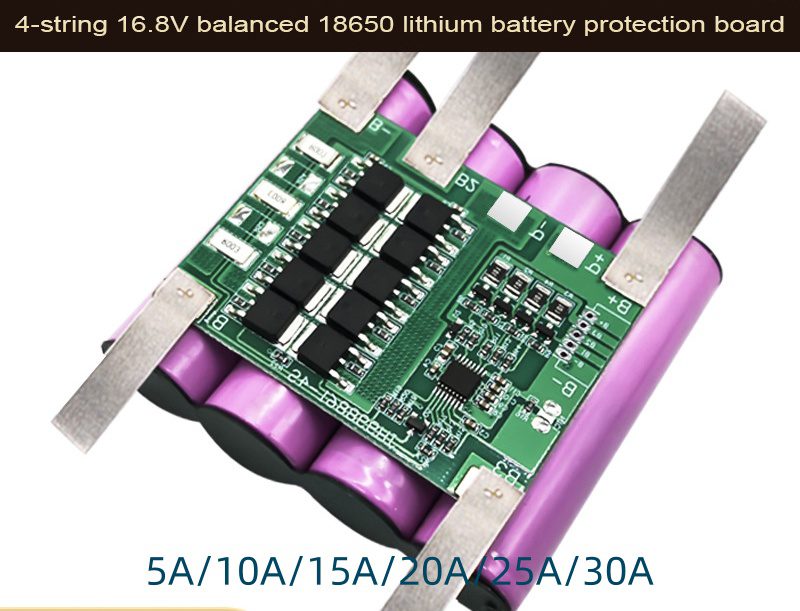
18650 cells are widely used in portable equipment and industrial battery modules, while 21700 cells are increasingly adopted in high-capacity systems. Because of their larger size, 21700 cells typically operate at higher current levels and generate more heat during charging.
For this reason, a custom battery charger is often required instead of an off-the-shelf solution.
Charging current and thermal considerations
A well-designed charger continuously monitors voltage and temperature feedback from the battery pack. When paired with a BMS, the charger can reduce current dynamically to prevent thermal stress and cell degradation.
This approach is commonly applied in smart battery charger systems used for OEM lithium battery products.
Why customization matters in lithium charging
Unlike consumer chargers, OEM lithium chargers must adapt to different pack layouts, cell counts, and protection strategies. For example, a 5S or 10S lithium pack based on 18650 cells requires a different charging curve than a similar pack using 21700 cells.
Therefore, charger firmware plays a critical role. Microcontrollers such as STM32 allow engineers to fine-tune charging stages, cutoff thresholds, and fault responses.
Integration with BMS and communication modules
Modern lithium chargers rarely operate alone. Instead, they communicate with the BMS to obtain cell-level information. This communication enables accurate balancing, fault reporting, and long-term battery health management.
Such architectures are often aligned with industrial battery charger applications where reliability and traceability are essential.
Scalability for future battery platforms
A custom charger designed for 18650 and 21700 cells should also support future upgrades. By using modular hardware and flexible firmware, OEM manufacturers can extend the same charging platform to higher-capacity lithium packs without redesigning the entire system.
