
An industrial lead-acid charger is designed for applications where batteries operate under continuous load, extended standby conditions, or harsh environments. Compared with consumer-grade chargers, industrial chargers prioritize long-term stability, charging accuracy, and system-level protection.
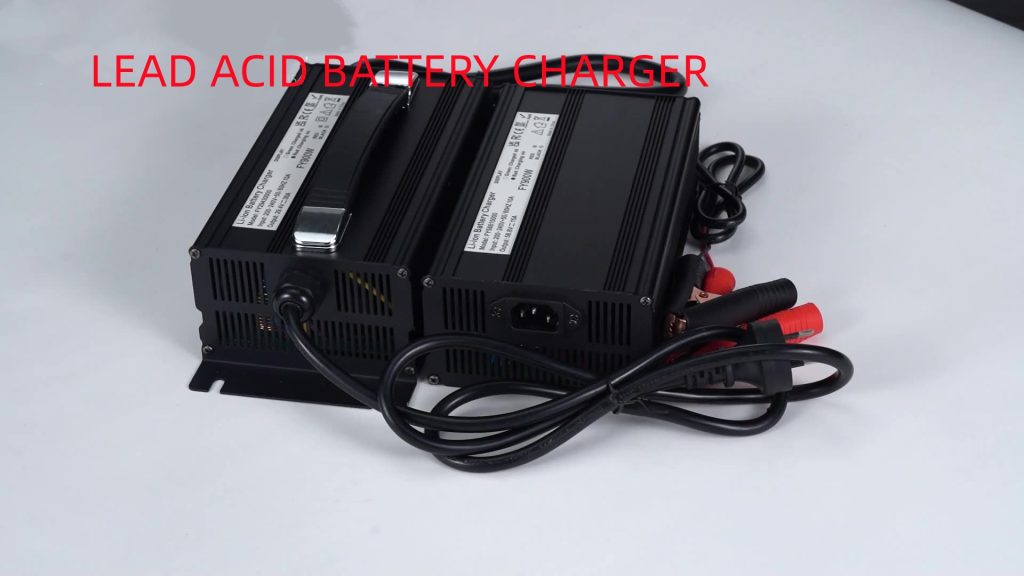
Key Characteristics of an Industrial Lead-Acid Charger
Industrial lead-acid chargers are engineered to deliver controlled voltage and current over long operating cycles. These chargers typically support multi-stage charging profiles to maintain battery health while preventing overcharge during float operation.
Voltage Stability and Float Charging Control
In industrial environments, lead-acid batteries often remain connected to chargers for extended periods. Precise float voltage regulation is critical to minimize grid corrosion and water loss while ensuring the battery remains fully charged.
Technical references highlight that proper float voltage management plays a major role in extending lead-acid battery service life in industrial systems. Best practices for lead-acid charging stages
Industrial Applications Using Lead-Acid Chargers
Industrial lead-acid chargers are widely used in energy storage cabinets, backup power systems, industrial mobility equipment, and stationary power installations. These systems often demand wide input voltage tolerance and stable performance under fluctuating loads.
When standard charger specifications cannot meet system-level requirements, engineers frequently adopt custom industrial charger solutions to align charger behavior with specific battery configurations and operating scenarios.
Standards and Compliance Considerations
Industrial lead-acid chargers are commonly designed with reference to international battery performance and safety standards. Compliance with recognized guidelines helps ensure compatibility with battery manufacturers’ recommended charging limits.
For lead-acid systems, international standards such as IEC 60095-1 requirements for lead-acid batteries are often used as technical references during charger design and validation.
