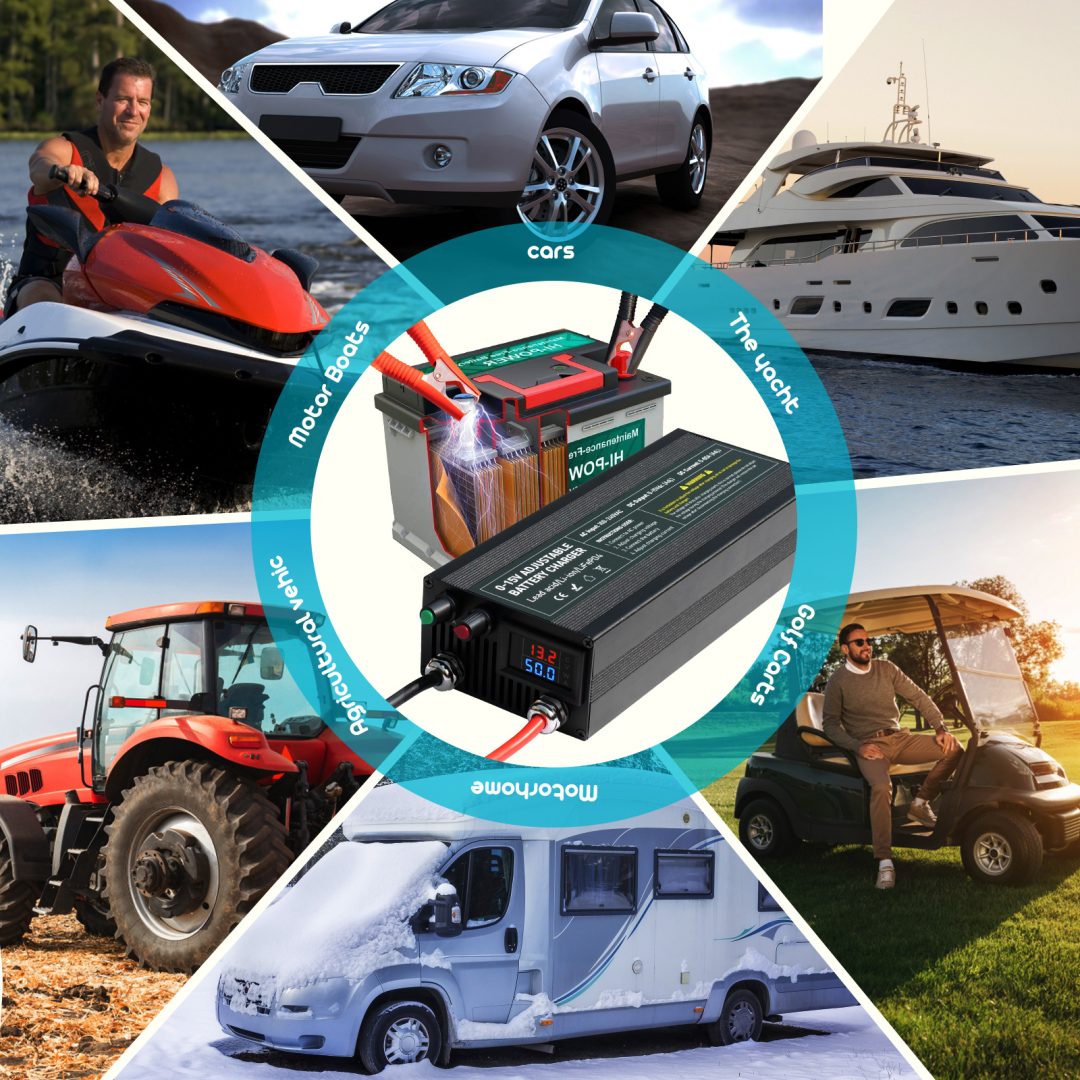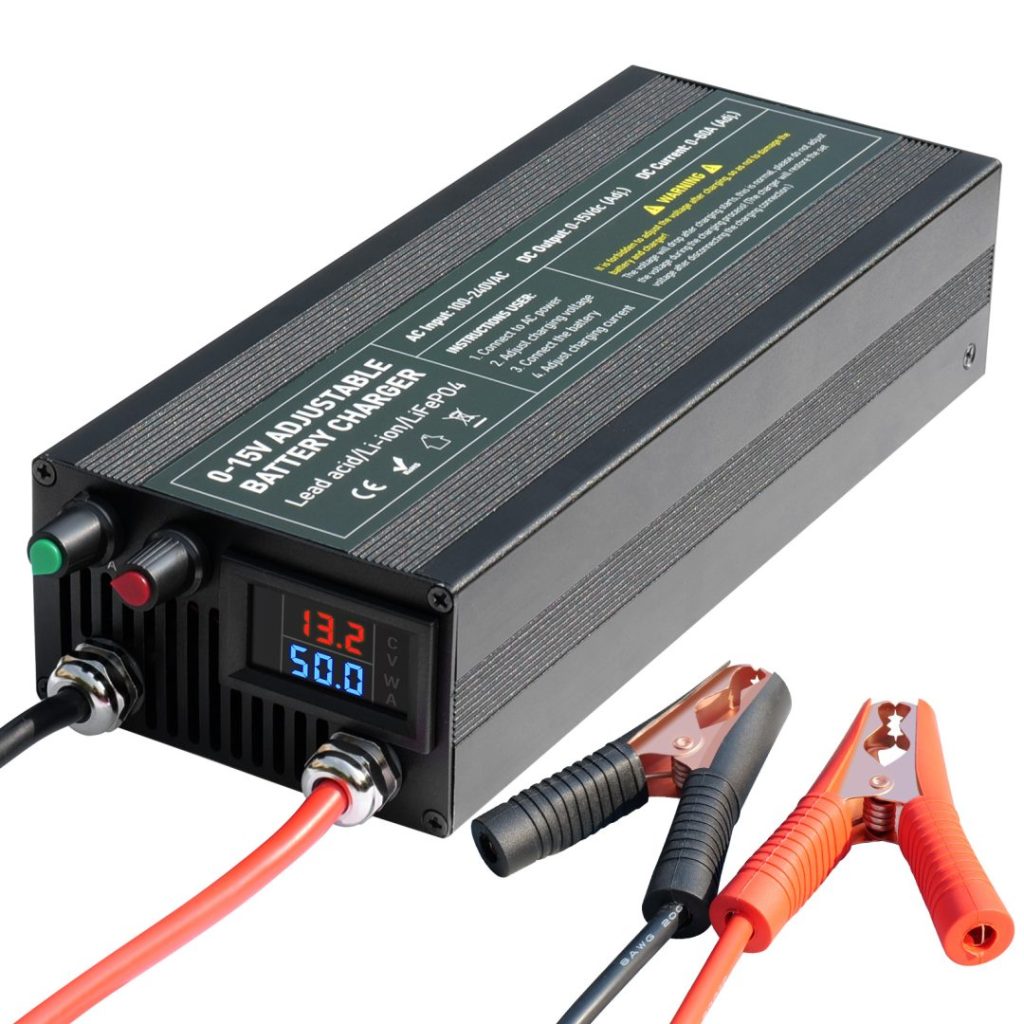
Looking for a truly versatile battery charger that can handle LiFePO4, Lead-Acid, and Ternary Lithium batteries without buying three separate units?
The short answer is yes: A 0-15V adjustable voltage smart battery charger with selectable current options (0–40A, 0–60A, or 0–85A) is currently one of the most flexible and cost-effective solutions on the market. By allowing precise micro-adjustments to both voltage and current, this charger works seamlessly across 12.6V Lithium, 14.6V LiFePO4, and ~13.8V Lead-Acid systems, giving DIY enthusiasts, marine mechanics, and solar installers full control over their charging profiles.
Why Adjustable Charging is a Game-Changer for Modern Battery Systems
If you have worked with custom off-grid setups, marine power banks, or custom lithium bench builds, you already know the pain of fixed-voltage chargers. A standard 12V lead-acid charger will overcharge or undercharge a LiFePO4 pack, while an aggressive ternary lithium power supply might trigger the BMS (Battery Management System) shutoff prematurely.
That is precisely why we engineered and recommended our 0-15V Adjustable Voltage & Current Smart Battery Charger. Instead of locked-in factory presets, you get real-time display readouts and manual potentiometers to set the exact top-of-charge voltage your specific chemistry demands.
For those interested in the underlying integrated circuit technology and linear regulation techniques behind modern adjustable charging circuits, you can explore the SGM41566 linear adjustable charger charging solution documentation for technical deep dives.
Technical Specifications Summary
Here is a complete overview of the core technical parameters for this adjustable power supply and charger series:
| Parameter | Specification Details |
|---|---|
| Input Voltage Range | AC 100V – 240V, 50/60Hz (Worldwide Universal Input) |
| Output Voltage Range | 0.0V – 15.0V DC (Continuously Adjustable) |
| Output Current Options | 0–40A / 0–60A / 0–85A (Depending on selected model variant) |
| Compatible Battery Chemistries |
|
| Rated Power Options | 600W / 900W / 1275W Max Output |
| Protections & Features | Over-discharge protection, Reverse Polarity Protection, Digital LED Display Screen |
| Output Connectors | Heavy-duty Alligator Clamps / Anderson Connectors |
| AC Plug Types | US Plug, EU Plug, UK Plug, AU Plug available |
Where and How You Can Use This Charger (Practical Applications)
Because you can dial in any voltage from 0 to 15 volts and limit the maximum amperage output, this tool serves double duty as both a high-amp dedicated charger and a benchtop DC power supply. Here are the primary real-world scenarios where it excels:
1. Off-Grid Solar & RV LiFePO4 Battery Banks
LiFePO4 (Lithium Iron Phosphate) batteries require a strict 14.6V absorption voltage for a 4S (12.8V nominal) pack. Standard automotive chargers often fail to top off LiFePO4 cells or cause cell imbalance. By setting this unit to 14.6V and adjusting max current to match your generator or shore power limits, you can quickly top off large 100Ah, 200Ah, or 300Ah battery banks safely.
2. Top Balancing Individual Lithium Cells
Before assembling a custom battery pack, DIY builders must top-balance raw LiFePO4 cells in parallel at 3.65V per cell. With a 0-15V adjustable range, you can dial the voltage down precisely to 3.65V and allow high current charging without risking overvoltage damage.
3. Marine & RV Lead-Acid / AGM Maintenance
Traditional lead-acid marine batteries require roughly 13.8V to 14.4V depending on whether they are flooded, GEL, or AGM types. This charger allows you to dial in exact float and bulk settings to prevent electrolyte boil-off or sulfation.
4. Car Audio Power Supply & Bench Testing
High-end car audio installers need stable 13.8V – 14.4V DC power while tuning amplifiers and audio processors without draining the vehicle battery. The 60A and 85A high-current output options provide clean, sustained power during heavy load testing.
5. Emergency Battery Recovery & BMS Wake-Up
When a smart lithium battery trips its BMS low-voltage disconnect (LVD), many automatic chargers will refuse to recognize the battery because output terminals read 0V. With an adjustable manual charger, you can apply a safe, low voltage/low current charge to jumpstart and wake up the BMS safely.
Crucial Operating Rules: How to Avoid Damaging Your Unit
To ensure long service life and safe operation, always keep these golden rules in mind:
- Set Voltage BEFORE Connecting to the Battery: On first use, plug the charger into AC power, adjust the voltage knob to your target battery voltage, unplug it, connect the alligator clamps (Positive to Positive, Negative to Negative), and then plug back into AC power.
- NEVER Adjust Voltage While Charging: Once charging starts, adjusting the voltage dial can cause transient spikes that damage internal MOSFETs or your battery’s BMS.
- Understand Current Scaling for AC Inputs:
- 220V AC Input: Recommended to run up to 90% max current (e.g., set 60A model to ~54A).
- 110V AC Input: Recommended to cap max current at 80%.
- 100V AC Input: Recommended to cap max current at 70%.